 HBOTSALE


Hyperbaric Chamber Sleeping
497Discover How Hyperbaric Chamber Sleeping Improves Deep Sleep And Recovery. Expert Guide On Choosing Hard Vs. Soft Units & Safety.
View detailsSearch the whole station
The decompression phase ——what we often call the “low blood pressure” or “extravehicular preparation”—— typically takes 5 to 15 minutes. In a clinical setting, if you are using a medical single-person hard chamber with a standard treatment pressure of 2.0 to 2.4 ATA, the standard specification requires a slow reduction in pressure of approximately 1 to 2 PSI per minute. This time isn’t a rigid, fixed number; it depends largely on the pressure of your treatment, the type of equipment, and, most importantly, your individual ear’s ability to balance the pressure. As a technician, my first priority is to make sure you don’t experience ear or sinus pain while returning to normal pressure. So, if your ears are slow to vent, I usually extend this process to 20 minutes or more, safety and comfort always come first.
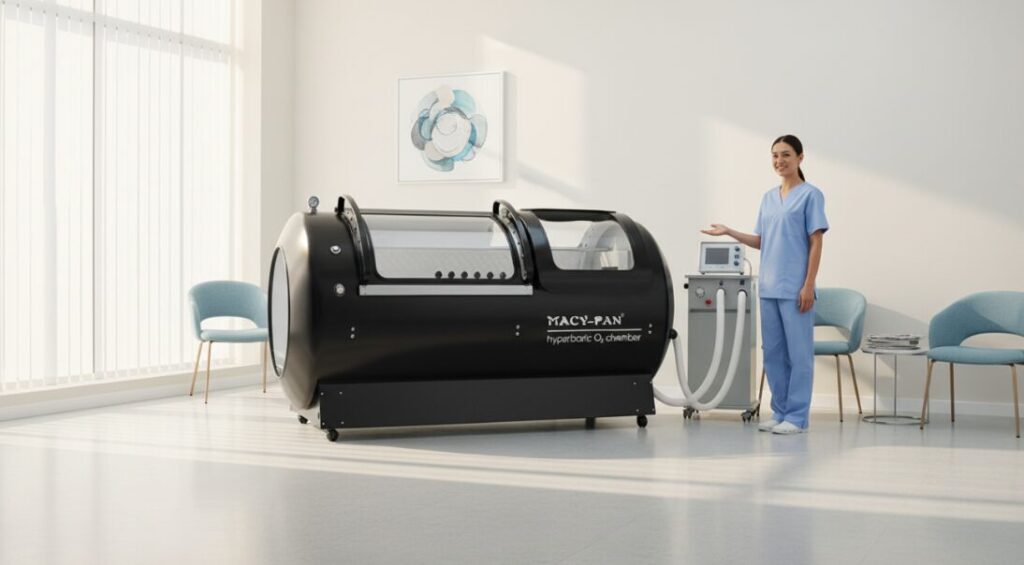
When we depressurize at a standard rate of 1 to 2 PSI per minute on the operating table, we are actually controlling the rate at which the gas in the cavity inside your body expands. In a single-person oxygen chamber, if the pressure drops too quickly, the air in the middle ear and sinuses can expand rapidly. With this slow, gentle decompression, we can ensure that your return from a high-pressure environment to normal sea level pressure is smooth and insensitive, without that sudden sting.
The deeper you “dive”, the longer the way back will naturally be.
The construction of the equipment itself also affects exhaust efficiency:
To the forefront of nutrition
HE5000
2.0ATA, Medical grade pressure is suitable to home health, Dimensions: 82 x 65 x 72 inch for 1-3 person using.
HE5000-Plus
2.0ATA, Medical grade pressure is suitable to home health, Dimensions: 102 x 65 x 72 inch for 1-4 person using.
Diamond-100
2.0ATA, Medical grade pressure is suitable to assist in the treatment of disease, diameter 39inch for two adults using.
When discussing “how long to decompress”, the biggest variable is actually the patient themselves. During the decompression phase, air must be expelled from the middle ear through the Eustachian tube. If you just have a stuffy nose or your ears are slow to adjust to pressure, I’ll immediately slow down the decompression. Sometimes I even hit a pause, hold that pressure level for a while, and then continue when your ears get used to it.
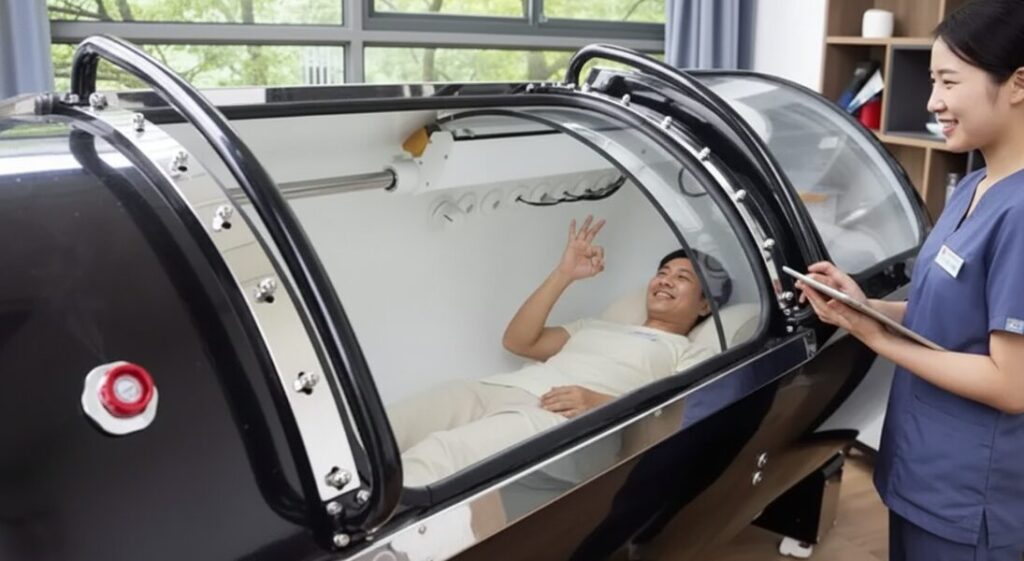
There are several core considerations for controlling the decompression rate:
While the technical answer is 5 to 15 minutes, in practice, your personal feelings are the only countdown timer. Whether you’re sitting in a 2.4 ATA professional cabin or lying in a 1.3 ATA home appliance, there’s only one goal: to get back to the ground safely and comfortably. Remember to talk to me more about those few minutes before leaving the cabin.
Author: Robert Miller
I’ve made it my mission to bridge the gap between complex medical protocols and patient comfort. My expertise lies in precision chamber operation and ensuring every patient transitions safely from high-pressure therapy back to ambient surface levels. I believe that understanding the ‘why’ behind safety procedures is the key to a stress-free recovery journey.
Discover How Hyperbaric Chamber Sleeping Improves Deep Sleep And Recovery. Expert Guide On Choosing Hard Vs. Soft Units & Safety.
View details
Exploring Hyperbaric Chamber Rentals For Home Recovery? Learn Average Costs, 1.3-1.5 Ata Specs, And Setup Tips Here.
View details
HP1501-100 modelo es de hecho la cámara de oxígeno hiperbárico blanda más eficiente del mercado para el tratamiento de dos personas. Su tamaño suele ser de 85cm a 100cm de diámetro y 225cm de longitud, lo que hace que dos adultos no se sientan ap...
View details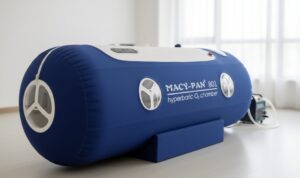
When it comes to the price of the official hyperbaric chamber in Macy-Pan, you have to have an idea: the investment span is quite large, usually ranging from $9,000 to more than $69,000. The final price depends on the pressure level and cabin str...
View detailsThis will close in 0 seconds