 HBOTSALE


Ist die Ozontherapie dasselbe wie die hyperbare Sauerstofftherapie?
680Entdecken Sie den Unterschied zwischen Ozontherapie und HBOT zur Behandlung von Lyme, chronischer Müdigkeit und Entzündungen.
Details anzeigenSuche im gesamten Bahnhof
Die Dekompressionsphase - die wir oft als “niedriger Blutdruck” oder “extravehikuläre Vorbereitung” bezeichnen - dauert in der Regel 5 bis 15 Minuten. In einer klinischen Umgebung, wenn Sie eine medizinische Ein-Personen-Hartkammer mit einem Standard-Behandlungsdruck von 2,0 bis 2,4 ATA verwenden, erfordert die Standardspezifikation einen langsamen Druckabbau von etwa 1 bis 2 PSI pro Minute. Diese Zeit ist keine starre, feste Zahl; sie hängt weitgehend vom Behandlungsdruck, von der Art des Geräts und vor allem von der Fähigkeit Ihres individuellen Ohrs ab, den Druck auszugleichen. Als Techniker ist es meine oberste Priorität, dafür zu sorgen, dass Sie keine Schmerzen im Ohr oder in den Nebenhöhlen haben, während sich der Druck wieder normalisiert. Wenn Ihre Ohren also nur langsam entlüften, verlängere ich diesen Vorgang in der Regel auf 20 Minuten oder mehr, denn Sicherheit und Komfort stehen immer an erster Stelle.
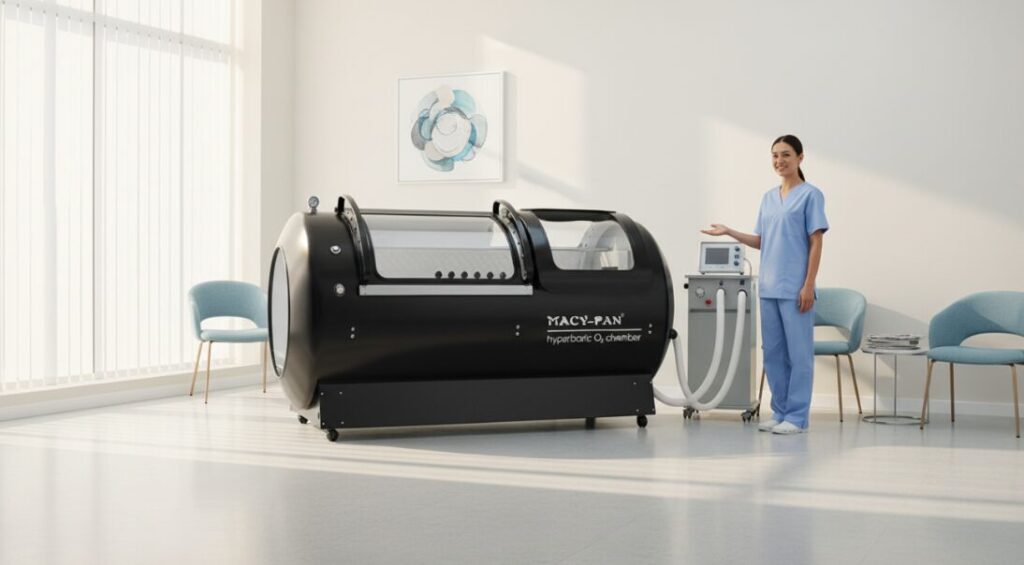
Wenn wir auf dem Operationstisch den Druck mit einer Standardrate von 1 bis 2 PSI pro Minute ablassen, steuern wir damit die Geschwindigkeit, mit der sich das Gas im Hohlraum Ihres Körpers ausdehnt. Wenn der Druck in einer Sauerstoffkammer für eine einzelne Person zu schnell abfällt, kann sich die Luft im Mittelohr und in den Nebenhöhlen schnell ausdehnen. Mit dieser langsamen, sanften Dekompression können wir sicherstellen, dass Ihre Rückkehr von einer Hochdruckumgebung zum normalen Druck auf Meereshöhe sanft und unempfindlich verläuft, ohne diesen plötzlichen Stich.
Je tiefer Sie “abtauchen”, desto länger ist natürlich der Rückweg.
Auch die Konstruktion des Geräts selbst wirkt sich auf die Abgaseffizienz aus:
An der Spitze der Ernährung
HE5000
2.0ATA, Medizinische Qualität Druck ist geeignet, um die Gesundheit zu Hause, Abmessungen: 82 x 65 x 72 Zoll für 1-3 Person mit.
HE5000-Plus
2.0ATA, Medizinische Qualität Druck ist geeignet, um die Gesundheit zu Hause, Abmessungen: 102 x 65 x 72 Zoll für 1-4 Person mit.
Diamant-100
2.0ATA, Medical Grade Druck ist geeignet, um in der Behandlung von Krankheiten zu unterstützen, Durchmesser 39inch für zwei Erwachsene mit.
Wenn es um die Frage geht, wie lange die Dekompression dauern soll, ist die größte Variable tatsächlich der Patient selbst. Während der Dekompressionsphase muss die Luft aus dem Mittelohr durch die Eustachische Röhre verdrängt werden. Wenn Sie nur eine verstopfte Nase haben oder Ihre Ohren sich nur langsam an den Druck anpassen, werde ich die Dekompression sofort verlangsamen. Manchmal mache ich sogar eine Pause, halte den Druck eine Weile und fahre dann fort, wenn sich Ihre Ohren daran gewöhnt haben.
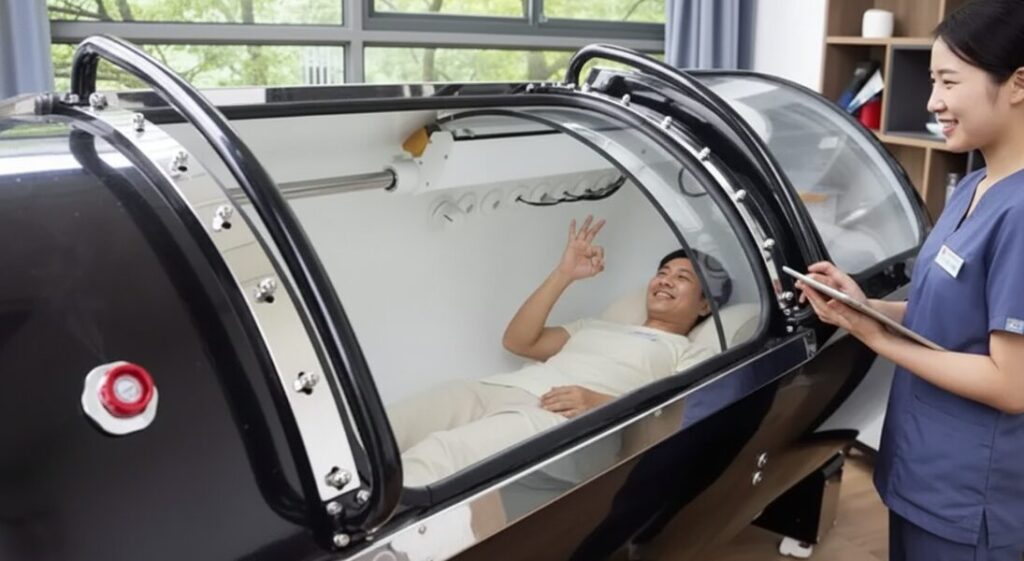
Für die Kontrolle der Dekompressionsrate gibt es mehrere zentrale Überlegungen:
Während die technische Antwort 5 bis 15 Minuten lautet, ist in der Praxis Ihr persönliches Gefühl der einzige Countdown-Timer. Egal, ob Sie in einer professionellen 2,4-ATA-Kabine sitzen oder in einem 1,3-ATA-Heimgerät liegen, es gibt nur ein Ziel: sicher und bequem wieder auf den Boden zu kommen. Denken Sie daran, mit mir über diese wenigen Minuten vor dem Verlassen der Kabine zu sprechen.
Autor: Robert Miller
Ich habe es mir zur Aufgabe gemacht, die Lücke zwischen komplexen medizinischen Protokollen und Patientenkomfort zu schließen. Mein Fachwissen liegt in der präzisen Bedienung der Kammern und darin, sicherzustellen, dass jeder Patient sicher von der Hochdrucktherapie zurück auf das Niveau der Umgebungsluft kommt. Ich glaube, dass das Verständnis des ‘Warum’ hinter den Sicherheitsverfahren der Schlüssel zu einer stressfreien Genesung ist.
Entdecken Sie den Unterschied zwischen Ozontherapie und HBOT zur Behandlung von Lyme, chronischer Müdigkeit und Entzündungen.
Details anzeigen
Sorgen Sie für echte Sicherheit in einer tragbaren Überdruckkammer für den Heimgebrauch. Lernen Sie die S.A.F.E.-Matrix kennen und vermeiden Sie Gesundheitsrisiken.
Details anzeigen
Entdecken Sie, wann eine HBOT notwendig ist. Experteneinblicke in die Sauerstofftherapie für Wunden, Co-Vergiftungen und Geweberegeneration.
Details anzeigen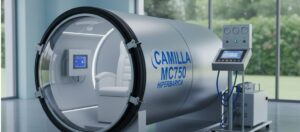
Die Wahl des idealen Kameratyps MC750 hiperbárica hängt in erster Linie von der Konfiguration des Koffers und dem Patientenfluss ab. Actualmente, la serie MC750 se clasifica principalmente en tres variantes técnicas: 1) MC750 Estándar (Fija), ...
Details anzeigenDies schließt sich in 0Sekunden