 HBOTSALE


¿Por qué cansa la oxigenoterapia hiperbárica?
769Aprenda por qué la fatiga después de HBOT es una señal positiva de reparación celular, desintoxicación y recuperación física profunda.
Ver detallesBuscar en toda la estación
La fase de descompresión, que solemos denominar “presión arterial baja” o “preparación extravehicular”, suele durar entre 5 y 15 minutos. En un entorno clínico, si se utiliza una cámara dura unipersonal médica con una presión de tratamiento estándar de 2,0 a 2,4 ATA, la especificación estándar requiere una reducción lenta de la presión de aproximadamente 1 a 2 PSI por minuto. Este tiempo no es un número rígido y fijo; depende en gran medida de la presión del tratamiento, del tipo de equipo y, lo que es más importante, de la capacidad individual del oído para equilibrar la presión. Como técnico, mi prioridad es asegurarme de que no experimente dolor de oídos o de senos paranasales mientras vuelve a la presión normal. Por lo tanto, si sus oídos son lentos para ventilar, por lo general extender este proceso a 20 minutos o más, la seguridad y la comodidad siempre es lo primero.
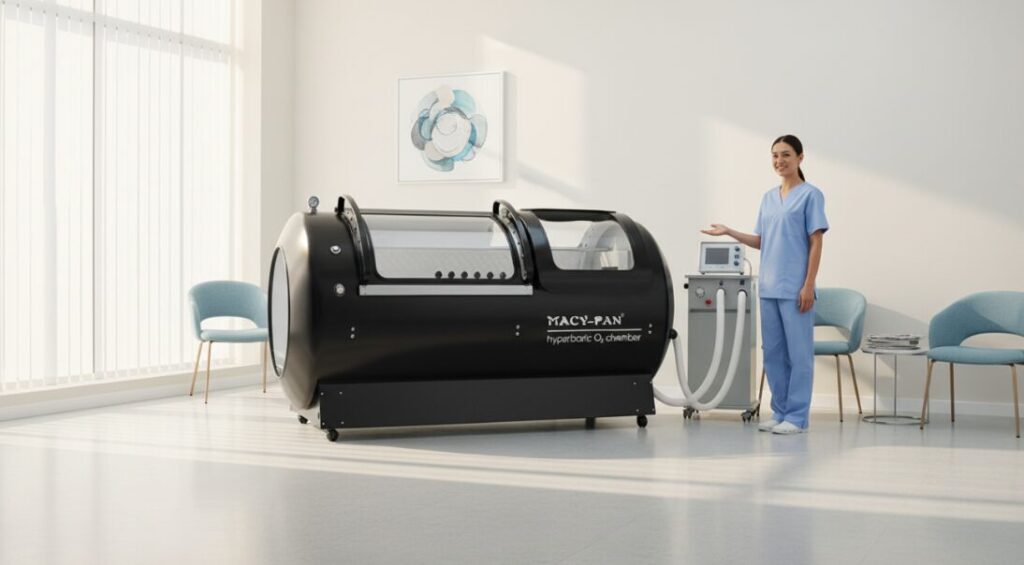
Cuando despresurizamos a una velocidad estándar de 1 a 2 PSI por minuto en la mesa de operaciones, en realidad estamos controlando la velocidad a la que se expande el gas en la cavidad del interior de su cuerpo. En una cámara de oxígeno para una sola persona, si la presión desciende demasiado rápido, el aire del oído medio y los senos paranasales puede expandirse rápidamente. Con esta descompresión lenta y suave, podemos garantizar que su regreso de un entorno de alta presión a la presión normal a nivel del mar sea suave e insensible, sin ese escozor repentino.
Cuanto más profundo “bucees”, más largo será naturalmente el camino de vuelta.
La construcción del propio equipo también afecta a la eficiencia de los gases de escape:
A la vanguardia de la nutrición
HE5000
2.0ATA, la presión de grado médico es adecuado para la salud en el hogar, Dimensiones: 82 x 65 x 72 pulgadas para 1-3 personas utilizando.
HE5000-Plus
2.0ATA, la presión de grado médico es adecuado para la salud en el hogar, Dimensiones: 102 x 65 x 72 pulgadas para 1-4 personas utilizando.
Diamante-100
2.0ATA, la presión de grado médico es adecuado para ayudar en el tratamiento de la enfermedad, el diámetro 39inch para dos adultos utilizando.
Cuando se habla de “cuánto tiempo hay que descomprimir”, la mayor variable es en realidad el propio paciente. Durante la fase de descompresión, el aire debe ser expulsado del oído medio a través de la trompa de Eustaquio. Si el paciente tiene la nariz taponada o sus oídos tardan en adaptarse a la presión, ralentizaré inmediatamente la descompresión. A veces incluso hago una pausa, mantengo ese nivel de presión durante un rato y luego continúo cuando tus oídos se acostumbran.
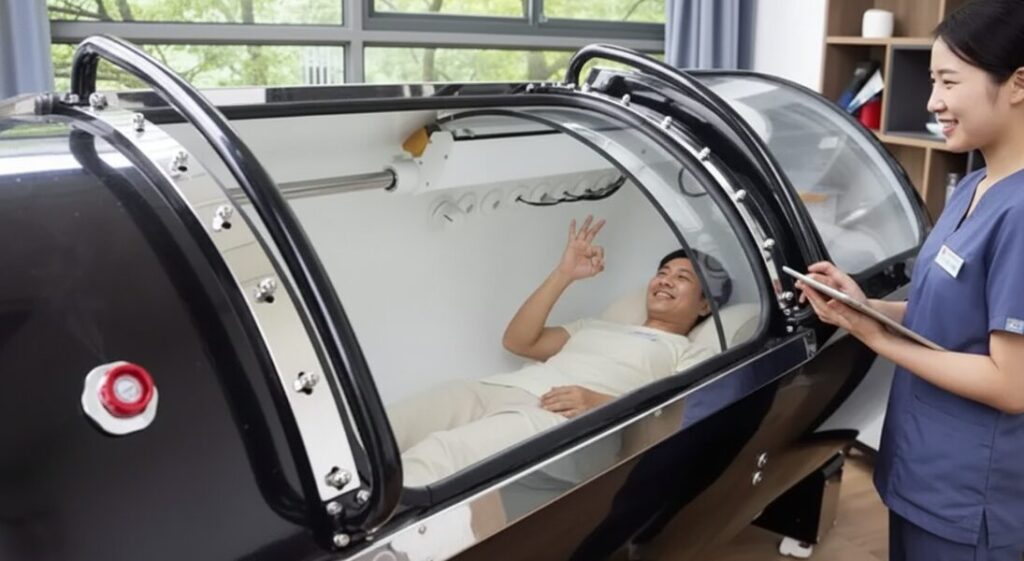
Existen varias consideraciones básicas para controlar la velocidad de descompresión:
Aunque la respuesta técnica es de 5 a 15 minutos, en la práctica, tus sensaciones personales son el único temporizador de cuenta atrás. Tanto si estás sentado en una cabina profesional de 2,4 ATA como tumbado en un aparato doméstico de 1,3 ATA, sólo hay un objetivo: volver a tierra de forma segura y cómoda. Acuérdate de hablarme más de esos minutos antes de salir de la cabina.
Autor: Robert Miller
Mi misión es tender un puente entre los complejos protocolos médicos y la comodidad del paciente. Mi experiencia radica en el funcionamiento preciso de la cámara y en garantizar que todos los pacientes pasen de forma segura de la terapia de alta presión a los niveles de superficie ambiente. Creo que entender el ‘por qué’ de los procedimientos de seguridad es la clave para una recuperación sin estrés.
Aprenda por qué la fatiga después de HBOT es una señal positiva de reparación celular, desintoxicación y recuperación física profunda.
Ver detalles
Hablando de la cámara de oxígeno individual de carcasa dura, el equipo HP2202 2 ATA pisó con precisión los puntos débiles de la industria. Puede realmente alcanzar la presión clínica 2.0 ATA sin participar en la instalación de ingeniería extrema...
Ver detalles
Fabricación de acero estructural y chapas: calidad contrastada. Cero retoques gracias a la verificación láser en 3D para la industria pesada.
Ver detalles
Maximice su sesión de oxígeno hiperbárico con nuestra guía sobre seguridad, relajación y recuperación en la cámara de oxígeno hiperbárico.
Ver detallesEsto se cerrará en 0 segundos