 HBOTSALE


Warum macht die hyperbare Sauerstofftherapie müde?
1036Erfahren Sie, warum Müdigkeit nach HBOT ein positives Zeichen für Zellreparatur, Entgiftung und tiefgreifende körperliche Erholung ist.
Details anzeigenSuche im gesamten Bahnhof
Die Einrichtung einer Sauerstoffkammer für Hunde zu Hause sorgt für sofortige Linderung bei Atemnot, hilft bei Trachealkollaps und verbessert die Lebensqualität während der Palliativversorgung erheblich. Die meisten handelsüblichen Heimgeräte liefern normobaren Sauerstoff, während eine echte hyperbare Sauerstofftherapie für Hunde spezielle Kammern mit einem Druck von 1,3 bis 1,5 ATA erfordert, um den Sauerstoff tief in das Blutplasma zu befördern.
Viele Hundebesitzer fügen ihren Tieren versehentlich Schaden zu, indem sie billige Sauerstoffkonzentratoren für Menschen mit geringer Durchflussrate mit geschlossenen Tierkammern kombinieren, was zu einer lebensbedrohlichen Anreicherung von Kohlendioxid führt. Erfahren Sie genau, wie Sie den richtigen Kammertyp, die richtige Sauerstoffdurchflussrate und den richtigen Druck sicher auf die spezifische Erkrankung Ihres Hundes abstimmen können.
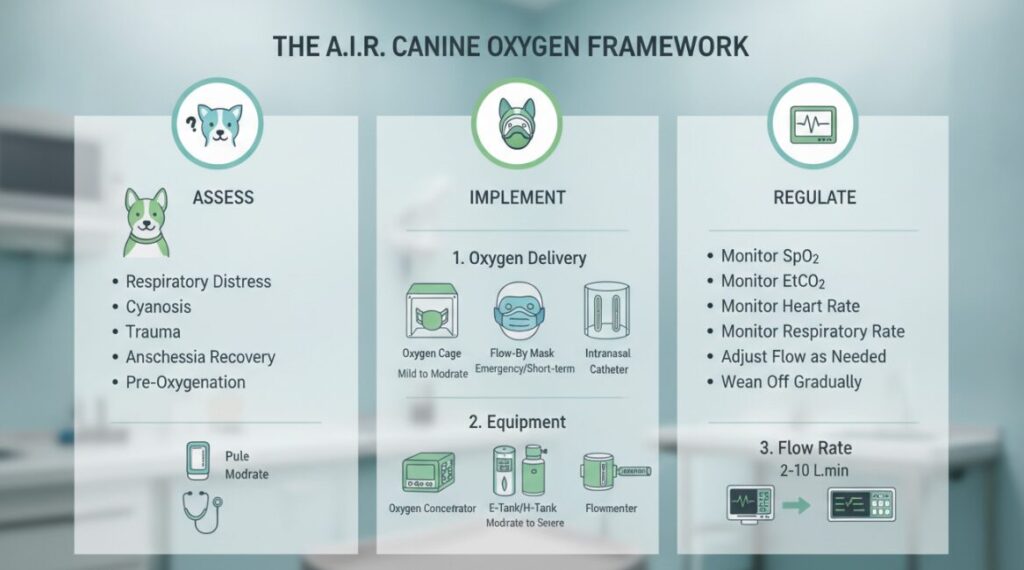
Bevor Sie Geräte kaufen, müssen Sie die spezifischen Atembedürfnisse Ihres Hundes einordnen. Das A.I.R.-Konzept verhindert lebensgefährliche Fehlausstattungen und stellt sicher, dass Ihr älterer Hund eine Unterstützung auf klinischem Niveau erhält.
Zustand beurteilen: Trachealkollaps, Herzinsuffizienz und pulmonale Hypertonie erfordern unterschiedliche Behandlungsmaßnahmen. Bei der palliativen Versorgung von Lungenkrebs steht die kontinuierliche, schonende normobare Sauerstofftherapie im Vordergrund. Bei der Genesung nach akuten Verletzungen oder bei schwerer Gewebehypoxie ist die hyperbare Sauerstofftherapie für Hunde von direktem Nutzen.
Die rechte Kammer implementieren: Verwechseln Sie einen Sauerstoffkäfig nicht mit einer Überdruckkammer. In einem Sauerstoffkäfig wird der Hund bei Raumdruck mit konzentriertem Sauerstoff umgeben. Eine leichte Überdruckkammer für den Heimgebrauch besteht aus einer mit einem Reißverschluss verschließbaren Polyurethan-Kammer und einem Luftkompressor, mit dem der Innendruck auf 1,3 ATA erhöht wird.
Durchflussmenge einstellen: Für den sicheren Betrieb einer geschlossenen Sauerstoffkammer für Haustiere ist ein kontinuierlicher Sauerstoffdurchfluss von mindestens 5 bis 10 Litern pro Minute erforderlich. Bei einem geringeren Durchfluss wird das vom Hund ausgeatmete CO₂ nicht ausreichend abgesaugt.
Einen günstigen Sauerstoffkonzentrator mit einer Leistung von 1–5 LPM online zu kaufen und ihn an ein geschlossenes PVC-Hundezelt anzuschließen, ist ein sicheres Rezept für Hyperkapnie. Ihr Hund atmet ständig CO₂ aus.
Eine geschlossene Sauerstoffkammer für Hunde erfordert einen hohen Luftstrom, um das schwere CO₂ physikalisch aus den Belüftungsöffnungen zu drängen. Wenn Sie einen leistungsschwachen Konzentrator verwenden, könnte der Sauerstoffanteil im Inneren der Kammer zwar 40% erreichen, doch der CO₂-Gehalt würde unbemerkt auf über 5.000 ppm ansteigen.
Für den sicheren Betrieb eines mittelgroßen oder großen Sauerstoffkäfigs für zu Hause benötigen Sie einen Sauerstoffkonzentrator in medizinischer Qualität mit einer Durchflussrate von 10 LPM. Wenn Ihr Hund stark hechelt, produziert er mehr CO₂, was noch höhere Durchflussraten erfordert. Lassen Sie stets eine Belüftungsöffnung vollständig offen. Verschließen Sie einen selbstgebauten Kunststoffbehälter oder ein minderwertiges Zelt niemals vollständig.
Bei der Behandlung von Atemversagen kommt es auf die Sauerstoffkonzentration an, während bei der Behandlung von Entzündungen im Tiefengewebe der atmosphärische Druck entscheidend ist.
Eine handelsübliche Sauerstoffkammer für Hunde zu Hause liefert bei normalem Raumdruck von 1,0 ATA Sauerstoff mit einer Reinheit von 40–50%. Dadurch werden die roten Blutkörperchen sofort mit Sauerstoff gesättigt. Dies stoppt Hustenanfälle bei Hunden mit Trachealkollaps und stabilisiert die Atmung bei Hunden, die unter Herzinsuffizienz leiden. Sie können einen Hund während der Palliativpflege stundenlang sicher in einer normobaren Kammer belassen.
Die hyperbare Sauerstofftherapie für Hunde zu Hause wird bei einem Druck von 1,3 bis 1,5 ATA unter Verwendung von Umgebungsluft oder angereichertem Sauerstoff durchgeführt. Durch den erhöhten Druck werden die Sauerstoffmoleküle komprimiert, sodass sie sich unabhängig von den roten Blutkörperchen direkt im Blutplasma, in der Rückenmarksflüssigkeit und in der Lymphe lösen können. Tierärzte empfehlen die mHBOT bei Rückenmarksverletzungen, zur Genesung nach einem Schlaganfall und zur Heilung schwerer Wunden.
| Vergleichsdimension | Normobarer Sauerstoffkäfig | Startseite mHBOT-Kammer (Soft-Shell) |
| Druck (ATA) | 1,0 ATA (Normaler Luftdruck / Meereshöhe) | 1,3 bis 1,5 ATA (Leichter Überdruck) |
| Hauptanwendungsfälle | Akute Atemnot, Asthma, Herzinsuffizienz, Notfallstabilisierung, allgemeine Sauerstoffzufuhr (sehr häufig in der tierärztlichen Versorgung von Haustieren oder in Kinderzelten). | Regeneration nach sportlicher Betätigung, chronisches Erschöpfungssyndrom, Wellness und Anti-Aging, Unterstützung bei leichten kognitiven Beeinträchtigungen, Höhenkrankheit, allgemeine Gewebeoxygenierung. |
| Sichere Laufzeit | Kontinuierlich (Stunden bis Tage), vorausgesetzt, die Sauerstoffkonzentration (FiO₂) wird auf einem sicheren Niveau gehalten (in der Regel < 50%), um eine Sauerstofftoxizität zu vermeiden. | 60 bis 120 Minuten pro Sitzung (In der Regel 1 bis 2 Sitzungen pro Tag). Eine längere, ununterbrochene Nutzung wird aufgrund von Druck und Ermüdung nicht empfohlen. |
| Kostenvoranschlag | $300 – $1.500 USD <br>(Beinhaltet den Käfig oder das Zelt aus PVC/Acryl sowie einen handelsüblichen Sauerstoffkonzentrator mit einem Fassungsvermögen von 5–10 Litern). | $3.000 – $10.000+ USD <br>(Umfasst die luftdichte Kammer, den Luftkompressor, den Sauerstoffkonzentrator und häufig einen Luftkühler/Luftentfeuchter). |
| Schwierigkeitsgrad der Einrichtung | Einfach <br>Einfach den Käfig aufklappen bzw. zusammenbauen, einen Schlauch vom Sauerstoffkonzentrator anschließen und das Gerät einschalten. | Mittel bis komplex <br>Dazu müssen vor jedem Einsatz mehrere Schläuche (Luftkompressor + Sauerstoff) verlegt, Kühlgeräte aufgestellt und die robusten, luftdichten Reißverschlüsse ordnungsgemäß verschlossen werden. |
Eine ordnungsgemäß eingestellte Sauerstofftherapie zu Hause verbessert das Wohlbefinden von Hunden in ihren letzten Lebensmonaten erheblich. Klinische Beobachtungen von Spezialisten für Atemwegserkrankungen bei Hunden zeigen deutliche Unterschiede bei den Genesungszeiten, die von der Qualität der Geräte abhängen.
Hunde, die in einem normobaren Sauerstoffkäfig mit einer Zufuhr von 10 LPM einen schweren Hustenanfall infolge eines Trachealkollapses erleiden, zeigen innerhalb von 8 bis 12 Minuten eine Rückkehr zur normalen Ruheatmungsfrequenz. Bei Hunden, die mit einem 5-LPM-System behandelt werden, dauert es aufgrund der unzureichenden Verdrängung des Umgebungssauerstoffs bis zu 25 Minuten, bis sich ihr Zustand stabilisiert.
Daten zur milden Hyperbartherapie zeigen, dass bei Hunden mit postoperativer IVDD das Wirbelsäulenödem bei zweimal täglicher Durchführung von 45-minütigen Sitzungen bei 1,3 ATA schneller abklingt (30%) als bei Hunden, die unter normalen Raumluftbedingungen genesen.
Die Temperaturregelung ist entscheidend für den Erfolg der Sauerstofftherapie zu Hause. Konzentratoren erzeugen Wärme, und geschlossene Kammern speichern die Körperwärme.
Kann ich meinem Hund Sauerstoff für Menschen geben?
Ja, der von einem Sauerstoffkonzentrator für den menschlichen Gebrauch erzeugte medizinische Sauerstoff entspricht genau dem für tiermedizinische Zwecke bestimmten Sauerstoff. Um ihn effektiv verabreichen zu können, müssen Sie das Gerät mit einer für die jeweilige Tierart geeigneten Sauerstoffmaske oder einer speziell für Hunde entwickelten Sauerstoffkammer kombinieren.
Wie viel kostet eine Überdruckkammer für Hunde?
Klinische HBOT-Kammern mit Hartschale, wie sie von Tierärzten verwendet werden, kosten ab $50.000. Tragbare, weiche Kammern für die milde Hyperbartherapie zum Heimgebrauch kosten zwischen $4.000 und $8.000. Standardmäßige normobare Sauerstoffkäfige in Kombination mit einem 10-LPM-Konzentrator kosten in der Regel zwischen $800 und $1.500.
Wie lange kann ein Hund zu Hause in einer Sauerstoffkammer bleiben?
Hunde können während der palliativen Versorgung auf unbestimmte Zeit in einem gut belüfteten, normobaren Sauerstoffkäfig verbleiben, sofern Temperatur, Luftfeuchtigkeit und CO₂-Abbau streng kontrolliert werden. Die Sitzungen der Hyperbartherapie dauern strikt zwischen 45 und 60 Minuten pro Sitzung, um eine Sauerstofftoxizität zu vermeiden.
Reichen 1,5 Liter Sauerstoff für einen Hund aus?
Nr. 1,5 LPM reichen nur aus, wenn Sie einem sehr kleinen Hund Sauerstoff direkt über eine Nasenkanüle zuführen. Für die Versorgung einer geschlossenen Sauerstoffkammer sind mindestens 5 bis 10 LPM erforderlich, um therapeutische Sauerstoffkonzentrationen zu erreichen und Kohlendioxid abzuführen.
Kann eine Sauerstofftherapie einen Trachealkollaps heilen?
Die Sauerstofftherapie heilt den physischen Abbau der Knorpelringe in einer kollabierten Luftröhre nicht. Sie dient als entscheidendes Behandlungsinstrument, um den Kreislauf aus Husten, Atemwegsentzündung und Sauerstoffmangel während akuter Schübe zu durchbrechen.
Sind Sauerstoffkäfige für Hunde sicher, wenn sie unbeaufsichtigt sind?
Sie dürfen einen Hund niemals völlig unbeaufsichtigt in einer in Betrieb befindlichen Sauerstoffkammer lassen. Stromausfälle, geknickte Schläuche oder Temperaturspitzen im Inneren der Kammer können für einen geschwächten Hund schnell zu einer lebensbedrohlichen Situation führen.
Was ist der Unterschied zwischen einem Sauerstoffkonzentrator und einer Sauerstoffflasche?
Eine Sauerstoffflasche enthält komprimierten, in seiner Menge begrenzten reinen Sauerstoff und muss regelmäßig medizinisch nachgefüllt werden. Ein Sauerstoffkonzentrator ist ein elektrisches Gerät, das Raumluft ansaugt, Stickstoff herausfiltert und kontinuierlich konzentrierten Sauerstoff abgibt – und zwar so lange, wie es mit Strom versorgt wird. Bei der Sauerstoffversorgung von Hunden zu Hause kommen fast ausschließlich Konzentratoren zum Einsatz.
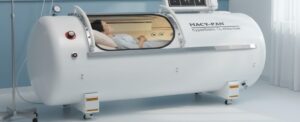
Erfahren Sie, warum Müdigkeit nach HBOT ein positives Zeichen für Zellreparatur, Entgiftung und tiefgreifende körperliche Erholung ist.
Details anzeigen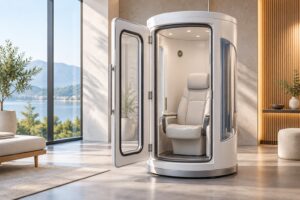
Assess A Vertical Hyperbaric Oxygen Chamber By Posture, Entry, Space, Pressure, And Installation Requirements.
Details anzeigen
Wenn es um die tatsächlichen Kosten einer hyperbaren Sauerstoffkammer geht, müssen wir zunächst ein Konzept verstehen: "Total Landing Cost". Die endgültigen Kosten für die Software tragbare Modell (wie die bekannten ST801 oder ST901) ist in der Regel zwischen U...
Details anzeigen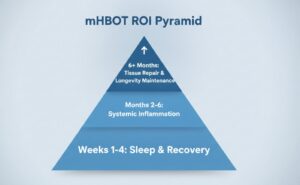
Informieren Sie sich noch heute über die tatsächlichen Kosten, Sicherheitsrisiken und die realen Ergebnisse der Mhbot-Therapie in einer Kammer für leichte Hyperbare Sauerstofftherapie.
Details anzeigenDies schließt sich in 0Sekunden