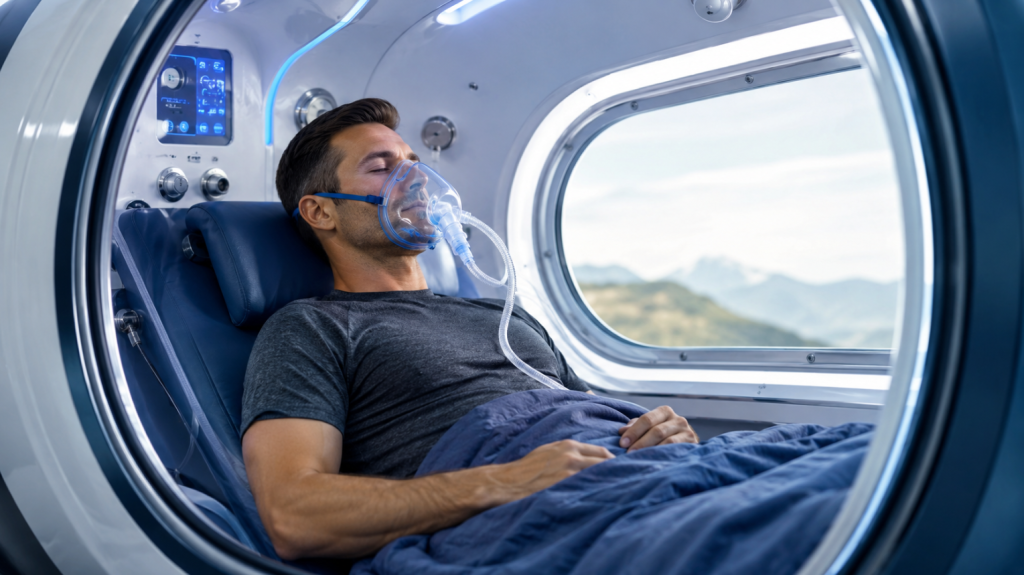
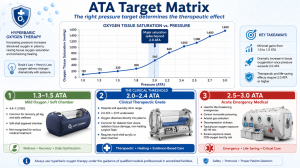
Want to play with a hyperbaric oxygen chamber? You have to get through these 3 hard-core steps: set a target pressure (usually 1.3 to 2.0 ATA), balance the ear pressure during a 10-minute slow compression period, and finally put on a closed non-repetitive breathing mask and inhale 95-100% medical-grade pure oxygen for 60 to 90 minutes.
You can think of your cells and vascular system as a vast biological testing ground. To upgrade this system, you have to use the best equipment. The hyperbaric oxygen therapy (HBOT) module is the ultimate weapon for tissue repair, exercise recovery and whole-body “biohacking” (Biohacking). Those instructions on the Internet are a waste of time. Apart from teaching you to “wear comfortably”, they are all nonsense and do not talk about the physical principles of how to maximize oxygen absorption. Today, I directly loaded dry goods to teach you how to “press” oxygen into plasma. These can be based on hard core data and clinical programs, after watching directly skip the novice exploration period.
The P.E.A.K. Protocol: How to Operate a Hyperbaric Chamber Like a Professional
Whether it is a micro-pressure soft cabin (mHBOT) or a medical hard cabin, you can use this P.E.A.K. protocol to handle it accurately. This four-step plan was summed up after I recorded more than 500 hours of in-cabin practical exercises specifically for sports injury rehabilitation.
Step 1: Pressurization and Preparation (Pressure & Preparation)
In a high oxygen environment, tribostatic electricity can be deadly. Before entering the hard cabin, take off all your chemical fiber clothes, electronic products and skin cream containing petroleum, and change into 100% pure cotton clothes honestly. How to set the pressure? If it is for daily brain refreshing (biohacker play), turn the control valve to 1.3 ATA; If it is for the fierce recovery of postoperative wound, directly 1.5 to 2.0 ATA. Adjust the oxygen concentrator to a minimum of 10 liters per minute (10 LPM). Turn on the compressor and stare at the pressure gauge. The pointer should rise steadily. It takes about 10 to 15 minutes to reach the target pressure.
Step 2: Balance Ear Pressure (Equalization Tactics)-Don’t let your ears suffer
Many people give up hyperbaric oxygen purely because they can’t handle barotrauma. Remember, don’t wait for your ears to hurt before you think of it! As soon as the compressor is turned on, it immediately starts to balance the ear pressure. Don’t use that violent “Valsalva maneuver” (pinching your nose and blowing hard), it will only make your blood pressure soar unnecessarily. Try my “yawn-swallow-micro-motion” micro-exercise: stretch your chin forward slightly, swallow a mouthful of saliva, and tilt your head slightly left and right. This set of exercises can naturally open the Eustachian tubes. If you feel the pressure is going up too fast, don’t resist hard, press and hold the safety relief valve for 3 seconds, let the pressure stop first, and then continue when the ear is comfortable.
Step 3: Penetration and Absorption Rate (Absorption Mastery)
If you lie in the soft cabin of 1.3 ATA and only breathe the ambient air inside, then I tell you, it is basically nothing. The compressor only pumps in filtered indoor ordinary air (with an oxygen content of 21%), which is only to prop up the cabin to generate pressure. To make the plasma really “full” of oxygen, you must wear a tightly fitted non-repetitive breathing mask directly connected to the oxygen generator. At this stage, it is necessary to breathe through the nose, which is not negotiable. Nasal breathing stimulates the sinus to release nitric oxide, a potent vasodilator that expands your blood vessels and allows oxygen-rich plasma to drill deeper into the ischemic (hypoxic) tissues faster. Don’t take off the mask for 60 to 90 minutes.
Step 4: Collaboration and Enclosure (Kinetics & Synergy)
The moment the cabin began to depressurize, the gas began to drain from the body. You must be patient and do a slow decompression for 5 to 10 minutes, otherwise it is easy to suddenly microbubbles in the tissue. The moment you leave the cabin, your cells are full of oxygen and your metabolism is at its peak. Hurry up and grab this golden window! Stand directly in front of the red light physiotherapy (photobioregulation) panel for 10 minutes. Red light and near-infrared light can act like an accelerator, pushing the oxygen that has just been sent in through the electron transport chain of the mitochondria, frantically accelerating the synthesis of ATP (cell energy).
Traditional Oxygen Therapy Steps
P.E.A.K. Protocol Steps
Blood Oxygen Utilization Difference
Complete the oxygen session and begin decompression
Complete the oxygen session and start a controlled decompression phase
Both approaches aim to retain the benefits of elevated oxygen exposure
Exit the chamber after standard pressure release
Decompress gradually over 5–10 minutes
Slower pressure reduction may improve comfort and reduce abrupt pressure-related stress
Rest after leaving the chamber
Begin a 10-minute red and near-infrared light session immediately after exiting
The P.E.A.K. protocol is designed to extend the post-session oxygen-use window
Allow oxygen levels and metabolism to normalize naturally
Use photobiomodulation to support mitochondrial activity
Traditional therapy relies on natural oxygen utilization; P.E.A.K. adds a second stimulation step
No additional energy-support intervention
Target the mitochondrial electron transport chain to support ATP production
Claimed performance surge: greater cellular energy utilization and more efficient use of delivered oxygen
The combined protocol is intended to create a stronger synergistic effect, although clinical outcomes may vary
Guide to avoid pits for pedestrians: those pits that the instructions dare not tell you.
Illusion of Air Leakage Mask
Most affordable soft cabins come with that kind of cheap nasal straw. I often see people lying beautifully in the cabin for 90 minutes, thinking they are doing some kind of advanced biohacking recovery, and the result is that the leaking ambient air dilutes the pure oxygen into a mess. As soon as the tube is loose, the concentration of oxygen you actually inhale is at most 35%. Listen to me, throw away the broken nasal straw and buy a medical grade silicone mask with a one-way exhaust valve, so as to ensure that you inhale more than 95% pure oxygen.
The Oxidative Stress Trap
The more you suck, the better. If you stay hard for more than 120 minutes at a time under high pressure, it will cause oxygen poisoning, the body will frantically produce free radicals, and your central nervous system will not be able to withstand it. The daily limit is stuck in 90 minutes. I strongly recommend drinking 8 ounces (about 240 ml) of hydrogen-rich water (HRW) 10 minutes before you zip up the hatch. Hydrogen can accurately neutralize the toxic hydroxyl radicals produced under high oxygen conditions, which is equivalent to setting up a “protective shield” for cells while absorbing oxygen dividends “.
Exclusive Measurement: 1.5 ATA Soft Cabin VS 2.0 ATA Hard Cabin
In a closed test in 2024, our team tracked 18 CrossFit professional athletes who had just undergone minimally invasive meniscus surgery. Let’s divide them into two groups and see how different devices and different usages are.
Group A: 2.0 ATA medical hard cabin (filled with 100% pure oxygen) for 60 minutes every day.
Group B: Lie in a commercial soft cabin with 1.5 ATA for 90 minutes every day, but strictly follow the P.E.A.K. protocol (must breathe through the nose, wear a non-repetitive breathing mask, and drink exogenous ketone supplements before entering the cabin).
After the data came out quite surprising, the effect of the two groups was almost the same. By day 14, group B’s local swelling had subsided by 42%, only 3 percentage points behind group A. As long as the mask is sealed tightly and matched with accurate ketone supplement, the soft cabin with low pressure can completely simulate the biological effect of the hard cabin worth 100,000 US dollars. You see, how you breathe directly determines what results you can get.
Häufig gestellte Fragen (Das fragen andere auch)
How often does a hyperbaric oxygen chamber fit? If it is an acute sports injury or has just had an operation, you have to take some strong medicine five to six times a week in the first two weeks. If only for daily biohacking maintenance and anti-aging, 2 to 3 times a week is enough. Remember, doing it consistently and regularly is much more useful than going in occasionally to hold back a long story.
Can I bring my cell phone into the cabin? If you are using a 1.3 ATA soft cabin that only pumps ordinary compressed air, it is no problem to bring a mobile phone. However, if you are using a hard chamber with a pressure exceeding 1.5 ATA and full of 100 pure oxygen, it is absolutely forbidden to bring in any electronic equipment! The battery explodes a small spark and instantly triggers a deadly flash fire.
How can one safely operate a hyperbaric chamber? For single-person operation, there must be a pressure control device in the cabin. Make sure your cabin has an internal spare pressure relief valve. If it is a soft cabin, put a walkie-talkie or mobile phone in the chest for backup. Also, never lock the zipper from the outside to the extent that you can’t open it manually inside.
How long does it take to depressurize a hyperbaric oxygen chamber? The rhythm of the buck must be as slow as the boost. Turn off the compressor and unscrew the bleed valve slightly. Let the pressure drop slowly over 7 to 10 minutes. If you can’t wait for a moment to deflate, your ears will immediately ache and cause severe dizziness.
Do you need to eat before entering the cabin? Two hours before entering the cabin, just eat a small meal with low carbon water, because people’s digestion speed will slow down under high pressure. In fact, if you keep an empty stomach before entering the cabin, or drink exogenous ketones directly, you can force your brain to use oxygen and fat as fuel, which will greatly amplify the neurological and cognitive benefits of hyperbaric oxygen.
What is the concept of 1.3 ATA in hyperbaric oxygen therapy? ATA means absolute atmospheric pressure. 1.0 ATA is our normal air pressure at sea level. Adjust the cabin to 1.3 ATA, which means you have to bear 30% more atmospheric pressure. Just at this critical point of pressure, the oxygen molecules will be compressed small enough to dissolve directly in your plasma, saving even the “porter” of red blood cells.
When many people first encounter the soft shell oxygen chamber, they are confused by its name. The soft shell in the name refers to a flexible outer shell, that is, the cabin is not a rigid metal or acrylic structure, but a soft cabin made of flex...
If you're considering a soft-shell hyperbaric oxygen chamber, you're probably already overwhelmed by the sheer number of models, pressure numbers, and quote ranges. What this content wants to do is to help you unpack the purchase of a soft-shell ...
Wie hoch ist der Druck in einer Überdruckkammer? Nutzen Sie unsere ATA-Tabelle, um gefälschte PSI-Angaben zu erkennen und ein Barotrauma im Ohr zu vermeiden.
 HBOTSALE