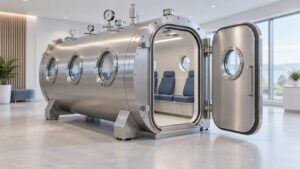
A hyperbaric chamber is a specialized medical pressure vessel designed to treat conditions where tissues are starved of oxygen by delivering 100% pure oxygen at 1.5 to 3.0 times the normal atmospheric pressure. While most people associate it with scuba diving, its primary purpose in modern medicine is to force oxygen to dissolve directly into the blood plasma, reaching damaged areas where circulation is compromised. This process triggers systemic healing that goes far beyond simple breathing.
If you are evaluating this therapy for a chronic wound or a sudden injury, the distinction between “breathing oxygen” and “hyperbaric therapy” is the difference between maintenance and regeneration.
Why Doctors Use Hyperbaric Chambers
Understanding the purpose of a hyperbaric chamber requires looking past the mask and into your cells. We use the 3A Framework to explain why this treatment succeeds when traditional medicine plateaus.
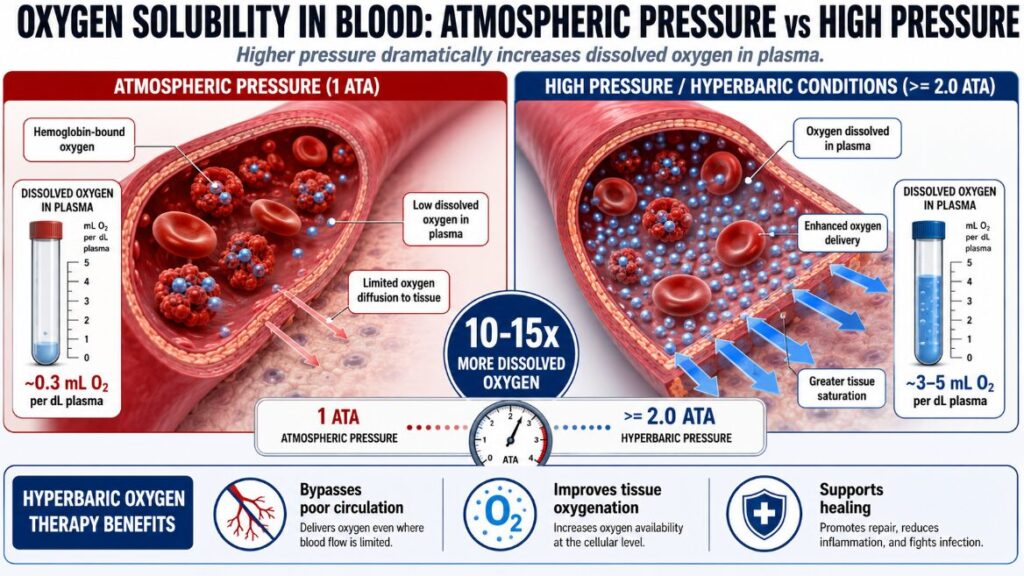
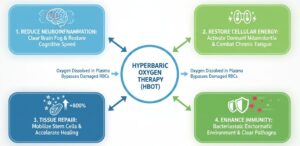
Absorption: Under pressure, oxygen obeys Henry’s Law. It stops relying on red blood cells and dissolves into all body fluids—plasma, cerebrospinal fluid, and lymph. This bypasses clogged or narrowed arteries to reach dying tissue.
Activation: High-pressure oxygen “wakes up” white blood cells, specifically neutrophils, making them significantly more effective at killing anaerobic bacteria.
Acceleration: HBOT signals the body to release stem cells from the bone marrow and stimulates the growth of new capillaries .
المعلمة
Normobaric Oxygen (1.0 ATA)
Hyperbaric Oxygen (1.5–2.4 ATA)
Ambient Pressure
1.0 ATA
1.5–2.4 ATA
Primary Oxygen Transport
Mostly bound to hemoglobin
Hemoglobin + large increase in plasma-dissolved oxygen
Plasma Oxygen Concentration
Minimal increase
Significant increase due to Henry’s Law
Oxygen Delivery to Compromised Tissue
Limited by blood flow
Enhanced diffusion into poorly perfused tissues
Blood Oxygen Saturation (Hemoglobin)
Typically 96–99%
Remains near full saturation; benefit comes from dissolved plasma oxygen
Stem Cell Release
Baseline physiological level
Increased mobilization observed during therapeutic HBOT protocols
Angiogenesis (New Capillary Formation)
Normal tissue repair response
Enhanced stimulation of new blood vessel formation over repeated treatments
Neutrophil Activity
Normal immune function
Increased effectiveness against anaerobic bacteria in oxygen-rich environments
Support for Chronic Wound Healing
Limited
Common clinical application
Overall Therapeutic Effect
Maintains normal oxygenation
Improves oxygen delivery, tissue repair, and regenerative processes under therapeutic pressure
3A Principle
Normobaric Oxygen
Hyperbaric Oxygen
Absorption
Oxygen primarily carried by red blood cells
Oxygen dissolves directly into plasma, cerebrospinal fluid, and lymph
Activation
Normal immune response
Enhanced neutrophil function and improved oxygen-dependent bacterial killing
Acceleration
Natural healing rate
Increased stem cell mobilization and stimulation of angiogenesis with repeated HBOT sessions
7 Critical Medical Uses Of Hyperbaric Chambers
Doctors prescribe hyperbaric oxygen therapy for specific diagnoses where systemic oxygenation is the only path to recovery.
Diabetic Foot Ulcers And Non-Healing Wounds
HBOT prevents amputations by oxygenating the hypoxic wound bed of diabetic patients. When high sugar levels damage small blood vessels, wounds can’t get the oxygen needed for collagen synthesis. High-pressure oxygen restarts this “stalled” healing process.
Decompression Sickness
Hyperbaric chambers are the only definitive treatment for decompression sickness. The pressure physically shrinks nitrogen bubbles in the bloodstream while the 100% oxygen gradient encourages the nitrogen to diffuse out of the body safely.
التسمم بأول أكسيد الكربون
HBOT clears carbon monoxide from hemoglobin much faster than normal air. CO binds to blood cells 200 times more aggressively than oxygen; the chamber uses sheer pressure to “kick” the CO off the cells and restore oxygen transport to the brain and heart.
Delayed Radiation Injury
For cancer survivors, HBOT treats the long-term side effects of radiation therapy. Radiation can lead to “hypovascular-hypocellular” tissue. The chamber stimulates new blood vessel growth in areas damaged by radiation months or years prior.
Chronic Refractory Osteomyelitis
When bone infections resist even the strongest antibiotics, hyperbaric oxygen provides the necessary support. Most bone-eating bacteria thrive in low-oxygen environments; increasing the oxygen levels makes the bacteria vulnerable and boosts the bone’s ability to remodel.
Sudden Sensorineural Hearing Loss
New clinical guidelines suggest HBOT as a primary treatment for sudden deafness if administered within the first 14 days. The inner ear (cochlea) is highly sensitive to oxygen deprivation, and the chamber can often reverse the loss by flooding the ear’s delicate structures with oxygen.
Arterial Gas Embolism
The chamber rapidly removes air bubbles that have entered the arterial system during surgery or trauma. This is a life-saving intervention that prevents strokes and heart attacks caused by these blockages.
The “Soft Chamber” Trap
Patients must distinguish between clinical “Hard Chambers” and “Soft/Portable Chambers”. Real medical healing for the 7 conditions listed above requires pressures of 2.0 ATA or higher. Soft-sided chambers, often found in spas or for home use, typically max out at 1.3 ATA and use concentrated room air rather than 100% oxygen.
If you are treating a diabetic ulcer or radiation necrosis, using a soft chamber is not just less effective—it is often a dangerous delay in necessary medical care. Always verify that your provider uses a hard-shell ASME-PVHO certified chamber.
ميزة
Medical-Grade Hard Chamber
Consumer-Grade Soft Chamber
Typical Pressure Range
1.5–3.0 ATA (clinical protocols often use ~2.0 ATA for many indications)
~1.2–1.3 ATA (limited pressure capability)
Chamber Structure
Rigid steel or acrylic ASME-PVHO designed system
Flexible inflatable fabric enclosure
Oxygen Delivery Method
Typically delivers 100% medical-grade oxygen under pressure
Usually compressed ambient air; oxygen concentration often not 100% unless supplemental system is used
Resulting Oxygen Bioavailability
High increase in plasma-dissolved oxygen due to elevated pressure
Mild increase; limited plasma oxygen elevation
Clinical Indications (FDA-cleared uses in the U.S.)
Used for approved indications such as decompression sickness, carbon monoxide poisoning, certain non-healing wounds, radiation injury, and other medically recognized conditions
Not cleared for treatment of FDA-approved HBOT medical indications; marketed primarily for wellness use
Applicable Medical Conditions (practical clinical use)
Commonly used in wound care, ischemic injury, radiation tissue damage, and hospital-based HBOT protocols
Generally used for wellness, recovery support, altitude adaptation, or relaxation purposes
Therapeutic Intensity
High (medical-grade hyperbaric oxygen therapy)
Low (mild hyperbaric exposure)
Stem Cell & Angiogenesis Effects
Observed in clinical HBOT protocols at therapeutic pressures (typically ≥1.5 ATA)
Limited or insufficient evidence at lower pressures
Neuro / Tissue Hypoxia Support
Can significantly improve oxygen delivery to hypoxic or poorly perfused tissue under clinical supervision
Minimal physiological impact compared to medical-grade systems
Certification / Engineering Standard
Often ASME-PVHO compliant and operated in regulated medical environments
Not ASME-PVHO medical systems; built for consumer wellness use
Supervision Requirement
Medical supervision in hospitals or certified HBOT clinics
Basic pressure control and safety features, varies by manufacturer
Primary Limitation
Higher cost, medical access required
Limited pressure and oxygen delivery capability restricts clinical applications
Best Use Case
Evidence-based medical hyperbaric oxygen therapy under physician direction
General wellness support and non-clinical recovery use
What This Means For Your Recovery
Your physician will likely prescribe a “dive” schedule of 20 to 40 sessions depending on the severity of your condition. Each session lasts about 90 to 120分钟. You may feel a “fullness” in your ears similar to flying, but the process is non-invasive and generally painless.
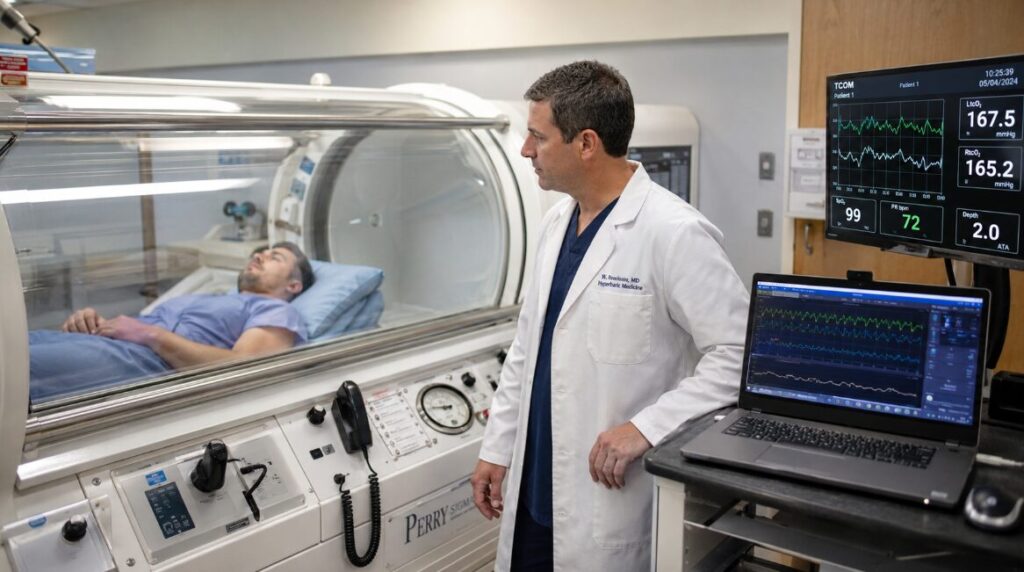
Before starting, ensure your clinic uses Transcutaneous Oxygen Monitoring. This technology measures exactly how much oxygen is reaching your skin surface while you are inside the chamber, allowing the specialist to prove the treatment is working after just a few sessions.
الأسئلة الشائعة
Q: What is the primary purpose of a hyperbaric chamber? A: The primary purpose is to dissolve high concentrations of oxygen into the blood plasma, allowing oxygen to reach damaged tissues that red blood cells cannot access due to swelling or poor circulation.
Q: Is a hyperbaric chamber used for weight loss or anti-aging? A: While research into telomere lengthening and cellular senescence is promising, the FDA has not approved HBOT specifically for anti-aging or weight loss. Its medical use remains focused on tissue repair and oxygen deprivation.
Q: How many sessions do you typically need in a hyperbaric chamber? A: For acute conditions like CO poisoning, 1-3 sessions may suffice. For chronic wounds or radiation injury, a standard protocol is 20 to 40 sessions, administered once daily.
Q: What are the risks of using a hyperbaric chamber? A: The most common side effect is barotrauma. Rare risks include temporary vision changes or oxygen toxicity, which is why clinical supervision in a certified facility is mandatory.
Q: Can I use a hyperbaric chamber at home? A: Only low-pressure “soft” chambers are available for home use. These are not cleared by the FDA for treating serious medical conditions like wounds or infections and should not replace clinical hyperbaric therapy.
في معسكرات الأوكسجين الهيدروكربونية التجارية الصغيرة، إذا كان عليك البحث عن "استاندار أوكسجينو" قابل للتأجير، فاعتقد أنه MC750. Específicicamente, el diámetro de esta serie es de 75-80 cm y la presión de funcionamiento está blo ...
 HBOTSALE