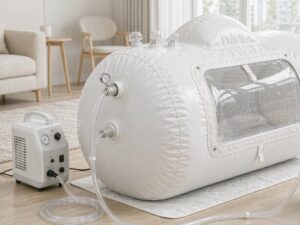
Simply put, a hyperbaric oxygen chamber is a specially designed confined space. In this, you need to breathe pure oxygen, and the air pressure is 1.3 to 3 times the normal environment. At ordinary times, there is only about 21% oxygen in the air we breathe, but in the high-pressure and high-oxygen environment of the oxygen chamber, pure oxygen will be forced into your plasma, cerebrospinal fluid and body tissues. In recent years, as long as you have paid attention to the topics of chronic fatigue, anti-aging or accelerated wound healing, you must often hear people discuss this stuff.
You understand the concept now, but the real power of hyperbaric oxygen chamber lies in how it uses “pressure” to turn ordinary oxygen into a deep repair artifact. At present, many clinics outside charge thousands of dollars for a course of treatment. There are also a large number of people who spend wasted money to buy a bunch of useless “home oxygen tents” because they do not understand the core principle of “air pressure. Today I’m going to give you a bottom, break it up and tell you how this technology works, what doctors call it in private, and how to avoid the pit of paying IQ taxes.
What is the name of hyperbaric oxygen chamber in the medical field?
When you go to the hospital and talk to doctors or researchers, they rarely use the colloquial term “pressurized oxygen chamber. The technical term you need to remember is: Hyperbaric Oxygen Therapy (HBOT, Hyperbaric Oxygen Therapy).
The next time the doctor suggests you do this treatment, it is HBOT. The word “Hyperbaric” is straightforward when taken apart: “Hyper” means to increase or exceed, while “baric” refers to air pressure. If you go to a rehabilitation center or clinic to look at their service menu, don’t look foolishly for the word “oxygen chamber”, just look directly 3 “hyperbaric oxygen therapy.
The “3-P” Oxygen Permeation Pyramid: Unveiling the True Logic of Self-Healing
If you search online, most medical websites will trot out complex physical formulas like “Henry’s Law” to explain it to you. Let’s skip all that tedious textbook nonsense. The entire healing mechanism of hyperbaric oxygen therapy is, in essence, built upon this “3-P” pyramid.
Layer One: Pressure — The Hardcore Conveyance System
Stress is the “physical push” your body needs. Imagine an unopened bottle of soda; because there is pressure inside the bottle, carbon dioxide remains dissolved in the water. As soon as you twist off the cap, the pressure is released, and all the bubbles escape. This is the principle used in oxygen chambers. By increasing the ambient pressure—measured in ATA—the pressure inside the chamber can forcibly dissolve oxygen deeply into your body fluids, rather than relying solely on red blood cells for its transport.
Layer Two: Plasma—The Transport Highway
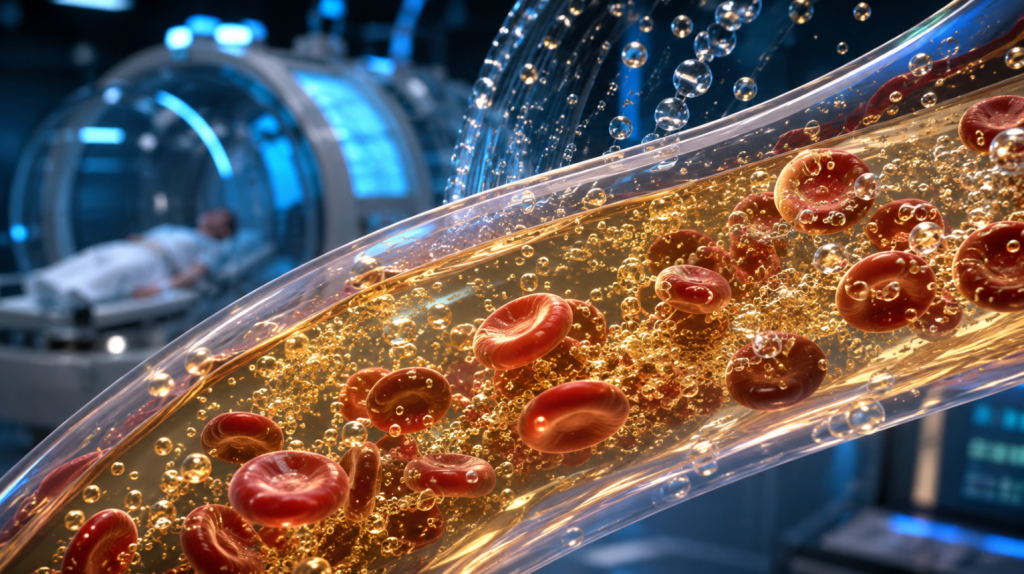
Under normal circumstances, only red blood cells are responsible for transporting oxygen in the human body. However, in a hyperbaric oxygen chamber, oxygen dissolves directly into your plasma—the liquid component of blood. Plasma can squeeze into even the tiniest capillaries, whereas those bulky red blood cells simply cannot pass through. This means that even the body’s oxygen-deprived “dead zones”—whether caused by injury, aging, or inflammation—can now be fully re‑oxygenated.
Level 3: Penetration – Cellular-Level Repair
When oxygen penetrates deep enough, true cellular repair is activated. Once oxygen‑rich plasma comes into contact with damaged tissues, bone, or injured brain cells, it acts like a biological spark plug. It stimulates the release of growth factors and stem cells, dramatically accelerating wound healing, significantly reducing severe swelling, and helping you combat certain particularly persistent bacterial infections.
No more confusion: hyperbaric oxygen vs oxygen
There are always people who confuse hyperbaric oxygen chambers with the kind of “oxygen bar” used for leisure in shopping malls. Oxygen is just taking a tube and blowing some scented oxygen into your nose at normal room temperature.
If you have to compare, the biggest natural barrier between the two is ” pressure “. Inhale pure oxygen at normal pressure, the benefit of deep tissue repair is basically zero. Because your red blood cell’s ability to carry oxygen is already full at 97-100%, you will only exhale the more pure oxygen you inhale intact. The reason why the hyperbaric chamber is cow is that it breaks through this limit with pressure and “plugs” oxygen directly into the liquid in your blood.
Fonctionnalité
Pressurized Oxygen Chamber
Oxygen Bar
Atmospheric Pressure
Increased pressure environment (typically above normal atmospheric pressure) to dissolve more oxygen into plasma and body fluids
Normal atmospheric pressure with standard oxygen concentration delivery
Delivery Method
Breathing high-concentration oxygen under controlled pressure inside a hyperbaric chamber
Inhaling supplemental oxygen through a nasal tube or mask at room pressure
Medical Efficacy
Designed for medical applications by increasing oxygen availability to tissues and supporting specific clinical treatments
Mainly provides a temporary feeling of fresh air or relaxation, with limited physiological impact
Target Audience
Patients requiring physician-supervised hyperbaric oxygen therapy and approved medical indications
General users seeking leisure, relaxation, or a wellness experience
Hardware vs. Software: A Guide to Avoid Pits for Ordinary People
Not all oxygen chambers have the same effect. Depending on your health appeal, the machines on the market fall into two distinct camps.
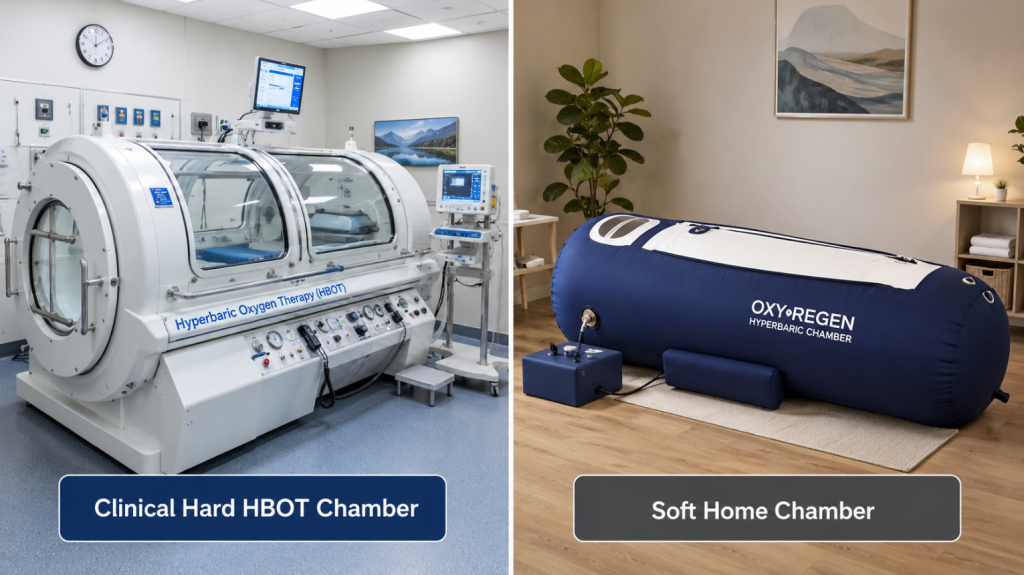
Medical Grade Hardware Cabin (Clinical Only)
The hardware cabin is generally made of stainless steel or transparent acrylic, which can withstand extremely high air pressure (2.0 to 3.0 ATA). This is what is used in hospitals to deal with serious illnesses such as carbon monoxide poisoning, radiation injury or diabetic foot. The entire space in this cabin is filled with 100 percent medical grade pure oxygen.
Light pressure soft cabin (household and daily health care)
The soft capsule is made of high-strength polyurethane or nylon and looks like a huge inflatable sleeping bag. Its working pressure is relatively low, usually between 1.3 and 1.5 ATA. After you lie in it, the cabin is propped up with ordinary air, and you have to wear a mask to get the oxygen. This cabin is particularly popular in anti-aging, athlete recovery and daily maintenance circles.
10 years of experts to dump dry goods: be careful to buy “fake oxygen chamber”
I have been studying the hyperbaric oxygen industry for several years and found a minefield dedicated to beginners. There are many unscrupulous merchants on the Internet selling that kind of cheap “oxygen cabin”. To put it bluntly, it is an inflatable bag with a low-quality small gas pump, which is simply cheating money.
oxygen machine trap:
A reliable household equipment must be equipped with a high-quality oxygen generator connected to a mask. Many cheap oxygen generators are extremely rubbish and cannot push high-purity oxygen to the mask under the resistance of high pressure in the cabin. The result is that you spend a lot of money sitting in a rumbling plastic bag, inhaling ordinary air. Before buying, be sure to verify whether this oxygen generator is capable of outputting oxygen with a purity of more than 90% even if the ATA pressure in the cabin is exceeded.
1.3 ATA’s Big Fool for Treating Diseases:
In order to sell cards, many health care institutions have blown the soft cabin of 1.3 ATA to the sky, promising to cure serious bone infection or radiation injury. Wake up! The clinical data is clearly written: to cure such serious diseases, at least 2.0 ATA must be achieved in the hardware cabin. Remember, the soft cabin is used to restore energy, help sleep and daily maintenance. If you really encounter serious traumatic diseases, go to the hard cabin honestly.
Real data speak: with mild hyperbaric chamber for 60 days, how is the joint recovery?
I tracked first-hand data from a rehabilitation center where they assigned 40 elderly people between the ages of 65 and 75 to use the 1.3 ATA software module to improve long-term knee inflammation. This set of data perfectly answers the question that everyone is most concerned about: What substantial help does it have on the ability to perform daily activities?
The plan for the elderly is to do it three times a week for 60 minutes for two consecutive months (60 days). The results were unexpectedly good: by day 30, 72% of the elderly said that joint stiffness was significantly reduced when they got up early. By day 60, the active test group’s dependence on over-the-counter painkillers (NSAIDs) was directly reduced by half. This proves that you don’t always need the extremely high-pressure equipment of the hospital to really improve the quality of life.
People Also Ask (Frequently Asked Questions)
Q: What exactly is the hyperbaric oxygen chamber used? A: It uses high air pressure to force pure oxygen into your plasma. This allows oxygen to reach the damaged tissue, quickly reduces swelling, and stimulates the release of stem cells, making the wound heal faster.
Q: How much does it cost to do hyperbaric oxygen? A: It’s between $200 and $500 an hour to go to the hospital and use a medical-grade hard capsule. If you go to a rehab center and do routine maintenance with a software cabin, it usually costs $50 to $150 an hour.
Q: Is it safe for the elderly to use hyperbaric chambers? A: It is very safe, especially the light pressure soft compartment 1.3 the ATA. However, doctors usually recommend checking your ears before using them, because the feeling of entering the cabin is exactly the same as the feeling of swelling in your ears when taking off on an airplane.
Q: How long do you have to stay inside each time? A: The normal treatment time is 60 to 90 minutes at a time. Doctors are extremely opposed to staying in for hours for good results, which can lead to oxygen poisoning.
Q: Can I play with my cell phone in the cabin? A: If it is a soft cabin (the cabin is ordinary air and oxygen is inhaled by a mask), it is completely no problem to bring a mobile phone or tablet into the cabin. But if it is the hardware cabin of the hospital, because it is filled with 100 percent pure oxygen, it is extremely easy to catch fire, and all electronic products are absolutely prohibited.
Q: What are the side effects of hyperbaric oxygen? A: The most common side effect is a mild barometer injury, similar to an ear pain on a plane. In a high-pressure environment like a hospital, a very small number of people may experience temporary vision changes or sinus pain.
Q: Who should never use hyperbaric oxygen? A: If you have a pneumothorax (collapsed lung), certain types of chronic obstructive pulmonary disease (COPD), or are taking certain chemotherapy drugs, never touch hyperbaric oxygen. Before starting treatment, be sure to ask your attending doctor.
Apprenez à utiliser et à faire fonctionner une chambre hyperbare. Maîtrisez notre protocole P.E.A.K. pour le « biohacking » dans les aires de jeux en pleine nature.
Apprenez à utiliser et à faire fonctionner une chambre hyperbare. Maîtrisez notre protocole P.E.A.K. pour le « biohacking » dans les aires de jeux en pleine nature.
The soft hyperbaric oxygen chamber adopts a flexible pressure-bearing structure, placing the user's whole body in an cabin environment higher than the surrounding atmospheric pressure. The most intuitive differences between it and the hardware co...
 HBOTSALE