 HBOTSALE


Rent Hyperbaric Oxygen Chamber
1067Rent A Hyperbaric Oxygen Chamber For Home Recovery. Get 1.3 Ata Hbot At 50% Less Than Clinic Costs.
View detailsSearch the whole station
Hyperbaric oxygen therapy (HBOT) is essentially the means to promote physiological repair through physical means, the effect is quite direct. Simply put, its core is to greatly increase the oxygen saturation in the blood and tissues. When you inhale pure oxygen in a stressful environment (usually 1.3 to 2.0 atmospheres), the body is like being “forced” into oxygen, and even some areas with blocked blood circulation or persistent inflammation can get much-needed repair momentum.
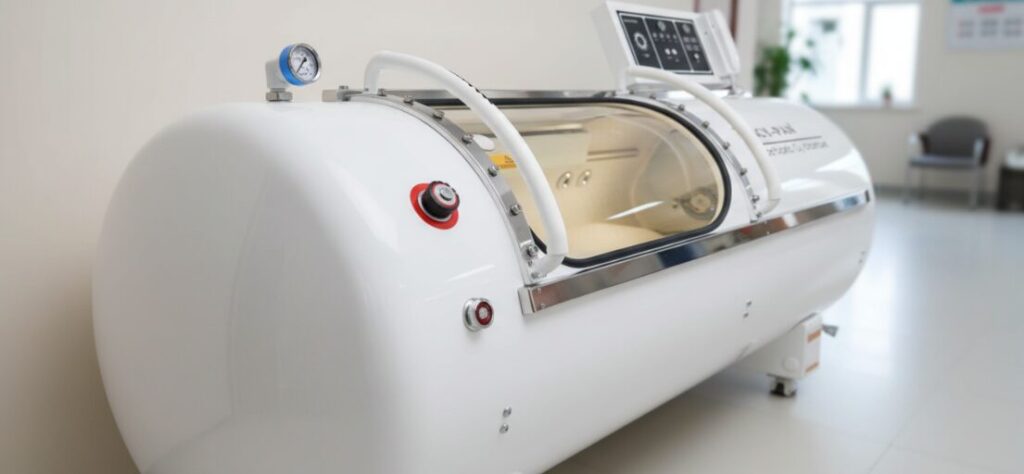
In clinical contact cases, many patients after a period of treatment, the most intuitive feedback is that the “brain fog” has dispersed, the surgical wound heals faster, and the swelling of the whole body has also subsided a lot. To put it bluntly, this is to charge the damaged DNA and cellular tissue. Under the professional doctor’s advice, this can not only shorten the rehabilitation cycle, but also be the 1 bridge connecting traditional medicine and cell regeneration therapy.
To understand how this works, you have to understand the logic of the physical exchange of gases. Usually we breathe, oxygen is mainly carried by hemoglobin in red blood cells. But into the high pressure chamber, the pressure up, oxygen directly dissolved in the plasma. As a liquid carrier, plasma can drill into the tiny blood vessels that red blood cells cannot squeeze in, and deliver oxygen to the “blind areas” that are ischemic due to injury.
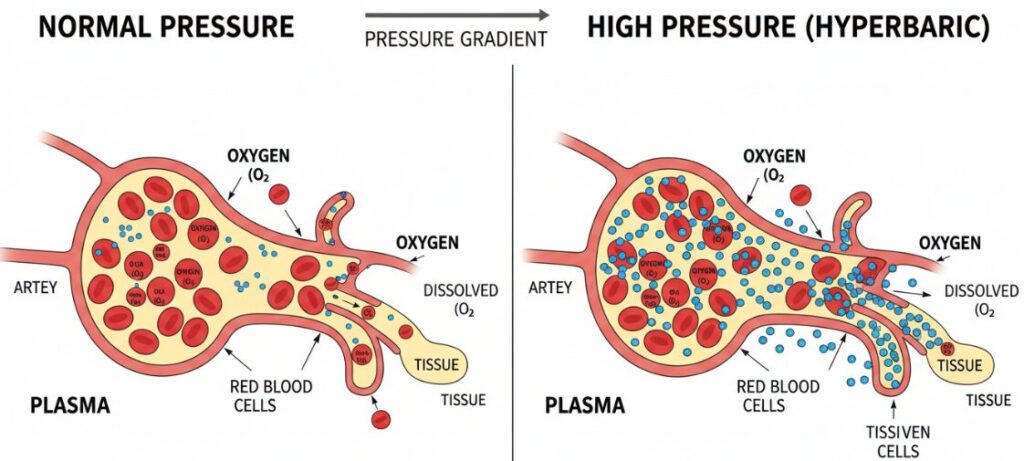
The core goal of HBOT is to treat ischemic tissue. The changes it brings are mainly reflected in these pieces:
1. Angiogenesis
Many wounds that have not been cured for a long time are actually “blocked roads”. Hyperbaric oxygen will give the body a signal to promote capillary proliferation and open up new channels for nutrient delivery, which is essential to improve tissue microcirculation.
2. Activate Stem Cells
Research data support this, and a high-pressure environment induces the bone marrow to release stem cells. You can think of these stem cells as the body’s own “maintenance engineering team”, where injuries go to repair tendons, nerves or muscles, the effect is much faster than simple rest.
3. Control Inflammation And Reduce Swelling
Although inflammation is a normal response of the body, long-term chronic inflammation is instead an obstacle to repair. High-pressure environment can shrink blood vessels to reduce edema, while ensuring the supply of oxygen, this “one contraction one release” regulation, to relieve postoperative pain or old injury is very helpful.
The disappearance of the “brain fog” mentioned by many patients is not a psychological effect. The brain is an extremely oxygen-consuming organ. Once there is no oxygen, the speed of thinking and concentration will decrease. For people with long-term fatigue or nervous system problems, hyperbaric oxygen can significantly improve the function of mitochondria in brain cells. With sufficient energy, the train of thought will naturally be transparent.
To the forefront of nutrition
HE5000
2.0ATA, Medical grade pressure is suitable to home health, Dimensions: 82 x 65 x 72 inch for 1-3 person using.
HE5000-Plus
2.0ATA, Medical grade pressure is suitable to home health, Dimensions: 102 x 65 x 72 inch for 1-4 person using.
Diamond-100
2.0ATA, Medical grade pressure is suitable to assist in the treatment of disease, diameter 39inch for two adults using.
In the application of hyperbaric oxygen, it should not be regarded as some kind of “niche assistance”, it is more like a connection between conventional treatment and overall cell repair.
In general, hyperbaric oxygen therapy is not just to treat a specific wound, but to provide sufficient energy to return the body to a efficient and self-healing state of operation. This is much more efficient than simply taking medicine or waiting for time to heal.
Author: Marcus Thorne
I am a specialist in regenerative medicine and hyperbaric therapy. With over a decade of clinical experience, I have dedicated my career to exploring how oxygen-based interventions can bridge the gap between traditional medicine and advanced cellular recovery. My work focuses on demystifying complex physiological processes—like angiogenesis and stem cell mobilization—to help patients understand how to optimize their own healing journey through evidence-based HBOT protocols.
Rent A Hyperbaric Oxygen Chamber For Home Recovery. Get 1.3 Ata Hbot At 50% Less Than Clinic Costs.
View details
HE5000 Mini debería ser el producto más inteligente en términos de equilibrio técnico. Resuelve un punto de dolor familiar muy real: puede acomodar cómodamente a dos adultos (o un padre que acompaña a un niño autista) sin llenar toda la habitació...
View details
Discover The Ideal HBOT Frequency For Acute & Chronic Conditions. Learn Why Consistency Is Key For Effective Healing.
View details
He5000 Überdruckkammer Für 2-3 Personen: 1.5 Ata, Ce-Sicherheit & Hoher Roi. Jetzt Professionelle Hbot Entdecken!
View detailsThis will close in 0 seconds