 HBOTSALE


고압 산소 챔버의 이점: 과학적으로 입증된 11가지 효과
733노화 방지, 줄기세포 분비, 수술 후 빠른 회복을 위한 고압 산소 챔버의 11가지 효능.
세부 정보 보기전체 방송국 검색
Most patients need 1 to 5 hyperbaric chamber sessions per week, with total treatment plans ranging strictly from 3 sessions for mild acute recovery up to 40 or 60 sessions for severe chronic conditions. Acute injuries demand 5 consecutive days of treatment per week, while anti-aging protocols require just 1 to 2 sessions weekly. Clinics frequently push expensive 40-session packages onto every patient walking through the door, completely ignoring the specific biological thresholds of different tissues. We will dismantle the exact medical timelines required for your specific condition, expose aggressive clinic upselling tactics, and provide the exact framework clinical physicians use to prescribe chamber frequencies.
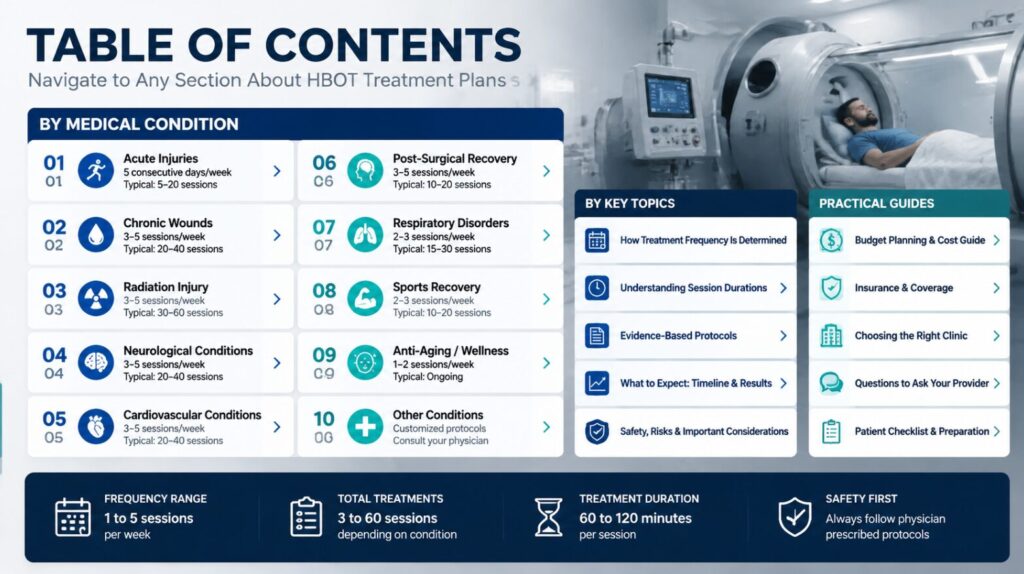
Medical professionals do not guess treatment lengths; they calculate them using the Dose, Frequency, and Total (D.F.T.) matrix. Buying a random package of sessions without aligning them to this matrix guarantees wasted money and zero physiological response.
Dose (Pressure Intensity):
Pressure dictates the physical depth oxygen reaches inside your blood plasma. A session inside a 1.3 ATA mild hyperbaric oxygen therapy (mHBOT) soft chamber delivers a fraction of the dissolved oxygen compared to a 2.0 ATA hard shell medical chamber. You cannot substitute three 2.0 ATA sessions with ten 1.3 ATA sessions; the minimum pressure threshold required to trigger deep tissue angiogenesis (new blood vessel formation) simply is not met in low-pressure environments.
Frequency (Sessions Per Week):
High-frequency treatments create a biological compounding effect. Forcing the body to adapt to daily high levels of reactive oxygen species (ROS) is what wakes up dormant stem cells. Spacing treatments out to once a week for a severe injury breaks this compounding chain, rendering the therapy ineffective for healing.
Total Sessions (The Complete Cycle):
Physical tissue repair operates on a strict timeline. Fibroblasts do not begin laying down visible new collagen in severe wounds until around the 15th session. Brain tissue requires even longer, rarely showing neuroplasticity shifts before the 35th or 40th session.
| Category | Dose (Pressure & Oxygen Exposure) | Frequency | Total Sessions | Primary Goal / Expected Timeline |
|---|---|---|---|---|
| Wellness / Anti-aging | Moderate HBOT exposure within a controlled therapeutic range | 2–5 sessions per week | 20–40 sessions | Support general wellness goals, cellular signaling, and recovery optimization |
| Acute Wounds | Higher-intensity clinical protocol tailored to wound severity | Daily or near-daily sessions during active healing | 20–40+ sessions | Support tissue repair processes; significant collagen remodeling may require multiple weeks |
| Neurological Repair | Individualized neurological rehabilitation protocol under medical supervision | Frequent sessions combined with rehabilitation strategies | 35–40+ sessions or more | Target long-term neurological recovery, functional adaptation, and neuroplasticity support |
| Element | Meaning |
|---|---|
| Dose | The intensity of oxygen exposure, including pressure level and treatment duration |
| Frequency | How often sessions are performed to maintain therapeutic stimulus |
| Total Sessions | The cumulative treatment count required for measurable biological changes |
Rest periods dictate cellular repair just as heavily as the pressurized oxygen itself. A 2026 cellular recovery clinical analysis demonstrated that forcing 7 consecutive days of hard hyperbaric therapy actually blunts ATP (cellular energy) production. Continuous, unbroken oxidative stress eventually exhausts the body’s natural antioxidant reserves. This data cements the clinical standard of “5 days on, 2 days off.” The weekend break allows your cells to clear metabolic waste and synthesize the ATP generated during the week.
Different pathologies require completely different session volumes to reach their healing threshold.
Surgical recovery and acute muscle tears require short, aggressive bursts of oxygenation to stop localized hypoxia and severe swelling.
Brain tissue and the central nervous system heal at a notoriously slow pace, requiring heavy repetition to force new neural pathway creation.
Healthy individuals use mild hyperbaric exposure to flush lactic acid, lengthen telomeres, and modulate systemic inflammation.
Consumers planning their budgets fall victim to severe information asymmetry when interacting with commercial HBOT clinics. The “40-session package” is the most abused sales tactic in the wellness industry.
Commercial clinics aggressively sell 40 sessions for everything from a sprained ankle to basic fatigue. This number is not a universal biological law; it is an old Medicare billing artifact. Decades ago, Medicare established a 40-session reimbursement limit specifically for treating diabetic foot ulcers and severe radiation tissue damage. Lazy or predatory commercial clinics simply adopted this maximum billing number as their default sales package for all walk-in clients. Paying for 40 sessions to heal a minor ligament tear is a complete waste of capital. Match your budget strictly to the condition-specific timelines outlined above.
Operating a home soft chamber completely alters your frequency mathematics.
Soft zip-up chambers operate at a maximum of 1.3 ATA using ambient air, whereas hard clinical chambers operate at 2.0 to 2.4 ATA using 100% pure medical oxygen. The oxygen saturation achieved in one single 90-minute session inside a hard chamber might take five or six sessions to replicate inside a soft chamber. If you are using a soft chamber for post-workout recovery, daily use (how often to use hyperbaric chamber at home) becomes necessary just to simulate the biological pressure achieved by a bi-weekly clinic visit. Do not expect clinical-grade healing timelines from consumer-grade home inflation bags.
1. How often hyperbaric chamber therapy can be done safely?
Clinical guidelines dictate that medical-grade hyperbaric therapy (2.0+ ATA) can be done safely 5 days a week, followed by a mandatory 2-day rest period. This prevents central nervous system oxygen toxicity while sustaining tissue repair.
2. Hyperbaric chamber how many sessions do I need for wound healing?
Severe or chronic wounds, such as diabetic ulcers or late radiation injuries, require 30 to 40 sessions. You must complete these sessions consecutively, 5 days a week, to force angiogenesis.
3. How often to do hyperbaric chamber for general wellness?
For basic anti-aging, fatigue management, and wellness, 1 to 2 sessions per week is the biological ceiling. Exceeding this frequency without an underlying medical condition simply depletes your natural antioxidants.
4. How often to use hyperbaric chamber at home (soft chamber)?
Because soft home chambers operate at a much lower pressure (1.3 ATA), users can safely operate them 4 to 6 times a week for mild athletic recovery or sleep optimization.
5. Can I do two hyperbaric sessions in one day?
Physicians occasionally prescribe BID (twice-a-day) protocols for sudden sensory hearing loss or acute surgical necrosis. These sessions strictly require a 4 to 6-hour surface interval between dives to prevent acute oxygen toxicity. Home users must never attempt twice-daily sessions unsupervised.
6. How long does it take to see results from a hyperbaric chamber?
Acute swelling and fatigue respond within 1 to 3 sessions. Deep bone infections, severe wounds, and neurological damage require a minimum accumulation of 20 sessions before patients notice tangible physiological changes.
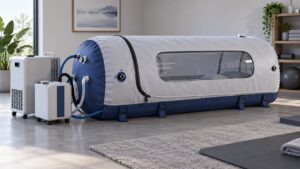
Compare a steel hyperbaric chamber for sale by pressure, system scope, installation, compliance, and service terms.
세부 정보 보기
가정용 반려견 산소 챔버: 고압 산소 요법에 대한 사실, 안전한 유량, 치명적인 이산화탄소 갇힘 현상을 피하는 방법을 알아보세요.
세부 정보 보기
HE5000은 매우 견고하고 안전하며 편안한 다중 사용자 하이퍼바이저입니다. 하이퍼커넥터를 여러 고객에게 동시에 제공하고자 하는 상업 센터에 매우 적합한 선택이거나 가격 대비 성능이 뛰어난 제품입니다.
세부 정보 보기다음에서 닫힙니다. 0 초