 HBOTSALE


高気圧治療室の費用 by Macypanofficial
479Macypanofficialによる高気圧チャンバーのコストをご覧ください。STモデル、ハードシェルを比較し、工場直販でお得。.
詳細を見る駅全体を検索
Many parents who want to use hyperbaric oxygen chambers (HBOT) for their children with autism or ADHD (attention deficit and hyperactivity disorder) like to ask me a question: “Does this thing work. A large number of clinical observations and brain SPECT scans have confirmed that hyperbaric oxygen therapy can directly reduce brain inflammation. This means that children with autism will begin to make eye contact and are willing to speak, while people with ADHD can really sit still and concentrate. But the premise is that you have to use absolute atmospheric pressure (ATA) and oxygen concentration to see these real cognitive improvements.
In reality, many families have spent tens of thousands of dollars to buy a “soft cabin” for their own use. As a result, nothing has changed. Why? Because the pressure of the equipment they use is not up to standard, it is totally useless. In this article, let’s break it up and talk about the real clinical effect of hyperbaric oxygen chamber, how much pressure should be used, and what substantial changes can you see in children in a standard 40 courses of treatment.
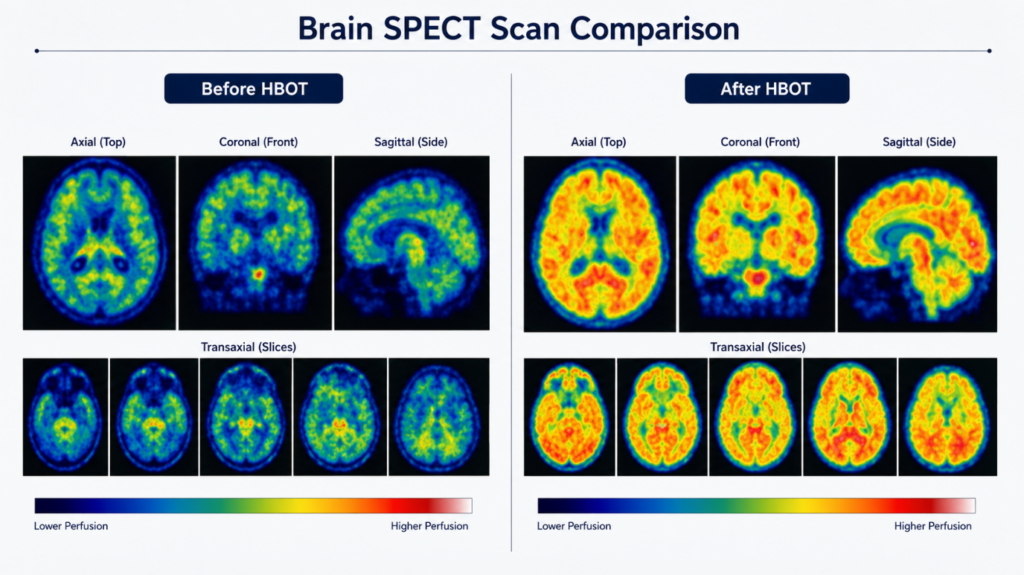
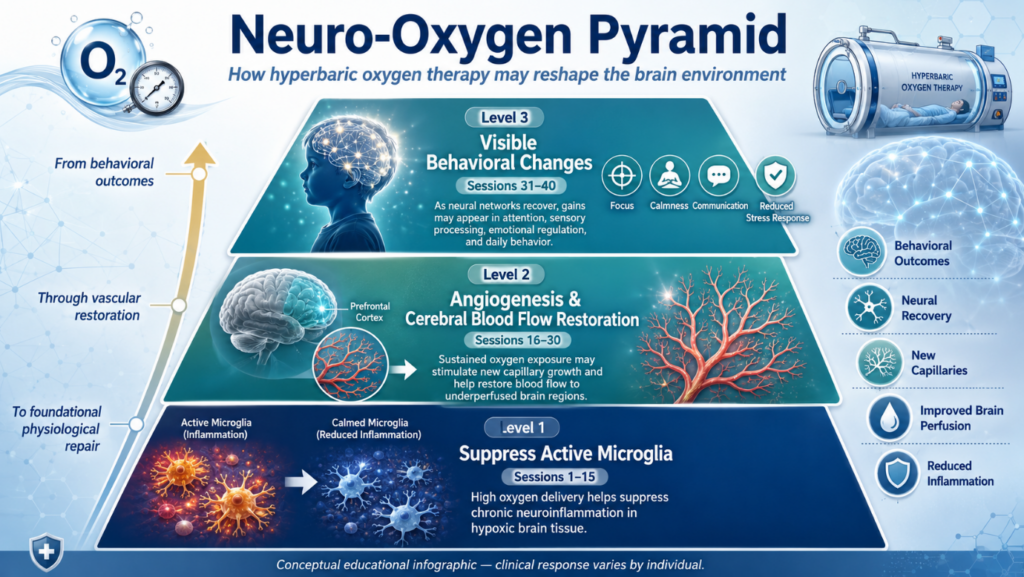
Oxygen in a pressurized environment, oxygen plasma will be forced “pressure” into the central nervous system. We often use a third-order model called the neuro-oxygen pyramid when evaluating the effects of hyperbaric oxygen chambers on autism and ADHD. This model can tell you very intuitively how the physiological repair in the brain is translated into the improvement of external behavior step by step.
Brain inflammation is like a big stone blocking the nerve pathways. Hyperbaric oxygen therapy is the first to deal with the brain’s immune pioneer-microglia. When high concentrations of oxygen are forced into extremely hypoxic brain tissue, that chronic brain inflammation is quickly suppressed.
Prefrontal cortex “hypoperfusion” (to put it bluntly, lack of blood supply) is a common problem in people with ADHD and autism. As long as a constant pressure is maintained, the brain will trigger the “angiogenesis” response-that is, the growth of new capillaries. As the blood flow to the brain gradually returns, you will find that those areas of the brain that were originally “sleeping” are reawakened.
The physiological healing inside the skull will definitely be manifested in the external behavior in the end. The repaired neural network allows the child to process external sensory information normally, and no longer triggers the body’s instinctive “fight or flight” stress response at every turn.
When it comes to hyperbaric oxygen therapy for children with autism, parents are most concerned about developmental milestones. Typically, after completing 40 sessions under a standard pressure of 1.3 to 1.5 ATA, children exhibit statistically significant improvements in communication and sensory processing.
Communication skills often undergo a qualitative leap. Many children who initially remain completely silent often, by around the twentieth attempt, begin to try making sounds, imitate adult speech, or deliberately point with their hands at the objects they want. In fact, this is because the swelling in the brain’s language centers (Broca’s area and Wernicke’s area) has subsided; once the physiological obstruction is gone, speaking naturally comes easily.
Many individuals with autism have long silently endured the physical discomfort caused by sensory processing difficulties. Hyperbaric oxygen therapy can help restore order to their dysregulated autonomic nervous system. Many parents have told me that their children’s repetitive, stereotyped behaviors—such as repeatedly flapping their hands, head-banging, or emotional meltdowns—have dropped off sharply. They also make eye contact with you more often, because their inner state has finally eased up—they’re no longer on the verge of a mental breakdown from external stimuli.
To objectively assess whether hyperbaric oxygen therapy is effective for ADHD, we must first challenge a long-held misconception: treating ADHD is not limited to suppressing symptoms through daily use of central‑nervous‑system‑depressant medications such as “Concerta” and “Ritalin.” The underlying mechanism of hyperbaric oxygen therapy is to physiologically repair your damaged brain tissue, enabling the brain to restore the balance of dopamine and norepinephrine on its own.
In the brains of individuals with ADHD, the prefrontal cortex, which governs executive function, is actually kept in a state of “partial dormancy.” As the blood oxygen level rose, this area was immediately and completely activated. I came across a very typical real-life case: there was a third-grade boy whose homework sessions were nothing short of a “battle”—he’d fiddle with his eraser one moment and dash to the bathroom the next, as if he had nails stuck in his seat. After 20-some sessions of hyperbaric oxygen therapy, the kid’s mom was so excited she messaged me in the middle of the night, saying that for the first time ever, their child had sat at his desk for a full 40 minutes without getting up once, and knocked out two math worksheets in one go. The “engine” within the child that was always eager to burst forth has finally been physically pressed down on the pause button.
Many parents don’t realize that what’s often labeled as “hyperactivity” is actually the result of extreme fatigue, compounded by a severely disrupted internal biological clock, leaving the body with no choice but to “fidget incessantly” in a desperate bid to stay awake. For ADHD, a hyperbaric oxygen chamber is like a “one‑click reboot” for the nervous system. Typically, you can’t even manage 10 consecutive cycles before that truly restorative, deep REM (rapid eye movement) sleep returns. As long as the brain gets truly sufficient sleep, that compensatory hyperactivity during the day—characterized by restlessness and fidgeting—will naturally subside.
| Symptom | Autism Timeline (Sessions) | ADHD Timeline (Sessions) |
|---|---|---|
| Sleep disturbance | No clinically validated session timeline | No clinically validated session timeline |
| Restlessness or fidgeting | No clinically validated session timeline | No clinically validated session timeline |
| Hyperactivity or impulsivity | No clinically validated session timeline | No clinically validated session timeline |
| Attention and concentration difficulties | No clinically validated session timeline | No clinically validated session timeline |
| Circadian-rhythm disruption | No evidence-based treatment course established | No evidence-based treatment course established |
| Social communication difficulties | No reliable therapeutic response timeline established | Not a core ADHD treatment outcome |
| Repetitive or restrictive behaviors | No reliable therapeutic response timeline established | Not a core ADHD treatment outcome |
| Claimed improvement within 10 sessions | Not supported by sufficient clinical evidence | Not supported by sufficient clinical evidence |
The health‑care equipment market is extremely murky these days. All kinds of false advertising are rampant, preying on anxious mothers who, desperate for a cure, will try anything. Many people pour tens of thousands of yuan into it and still see no results at all. To put it bluntly, they placed orders blindly without even grasping the most basic physical principles or meeting the minimum clinical requirements.
These days, the internet and social media feeds are full of adverts for these ‘home-use nylon zip-up soft chambers’ priced at 20,000 to 30,000 yuan. Take my word for it – and this is straight from the heart: stay well clear of them; anyone who buys one is simply throwing their money away. Clinically speaking, for hyperbaric oxygen therapy to have a genuine effect on the nervous system, the minimum pressure threshold is 1.3 ATA (absolute atmospheric pressure). Take a look at those cheap zipped chambers – they simply cannot achieve an airtight seal. Apply even a little pressure, and air will be hissing out through the zip seams day in, day out. Even if you crank the main unit up to the point of smoking, the pressure inside the chamber will barely reach 1.1 ATA at best. Forcing a child, who is already highly sensitive, into such a stuffy, hot bag that fails to meet pressure standards will only cause them distress and resistance—it won’t treat the condition at all.
Oxygen accounts for only 21 per cent of the air we breathe in every day. If you simply use a compressor to force ordinary air into the chamber as hard as possible, it can at best be called a ‘high-pressure air chamber’; even if the child were to sleep inside for three days and three nights, the oxygen concentration in their blood would not increase at all. To truly facilitate the repair of brain nerves, you must spare no expense and connect an external medical-grade high-flow oxygen concentrator with an output of at least 10 litres per minute (10 LPM). Furthermore, once the child is inside the chamber, they must strictly wear a tightly-fitting oxygen mask. If they don’t even wear the mask, and merely breathe the pressurised air inside the chamber, it will do absolutely nothing to repair the brain nerves – it’s a complete waste of money.
Countless anxious parents have fallen into this trap. If your child is currently suffering from severe brain inflammation and you wish to bring their condition back to normal quickly, you must opt for one of those large, rigid acrylic chambers capable of reaching 1.5 ATA. This device is like a ‘pressure cooker for stewing beef bones’ in our kitchens: it operates at high intensity with extremely strong penetrating power, forcing the medicinal effects deep into the brain in a short space of time. As for those low-pressure soft chambers that can only reach a maximum of 1.3 ATA? They’re more like a ‘zisha electric slow cooker’, suitable for long-term, gentle maintenance over many years.
I’ve seen far too many novice parents who, looking for a quick fix, buy a 1.3 ATA soft chamber for home use right from the start, hoping it will immediately stimulate the growth of new blood vessels in the brain. The result is that they end up spending twice the time and effort, yet their child shows absolutely no response. So, the heartfelt advice from experienced parents is this: to begin with, you must take your child to a reputable medical institution and diligently complete several full courses of treatment using a professional 1.5 ATA hard chamber. Only once you’ve seen a clear improvement in your child and a solid foundation has been laid should you consider purchasing a home device for long-term consolidation.
Q: Has the U.S. FDA actually approved the use of hyperbaric oxygen chambers to treat autism or ADHD?
A: It was indeed not approved. To be perfectly honest, this is known in medicine as “off-label use.” But why do so many top pediatric neurologists still prescribe it? Because whether it’s brain CT scans or a wealth of real‑world cases involving affected children, the evidence is overwhelming: it really does reduce inflammation in the brain. The doctor is having you proceed to quickly put out the “inflammatory fire” in your child’s brain, rather than stubbornly waiting for the FDA to print the words “autism” on the label before daring to act.
Q: How many times do I have to do this before I see real, tangible results?
A: Remember this hard-and-fast rule: at least 40 sessions of starting out—only then can it be considered a complete “basic course of treatment.” Usually, I do it back-to-back—five days a week, spending an hour and a half each time. I’ve encountered parents who, after trying something seven or eight times and not seeing any miracles, simply stopped. That’s such a pity! The new blood vessels in the brain have just begun to sprout a tiny bud; if you stop here, they’ll immediately atrophy, and all the suffering endured earlier will be for nothing, leaving no lasting changes to the brain tissue. To achieve a qualitative leap, 40 times is the absolute minimum—no fewer will do.
Q: How much stress (ATA) is best for children with autism?
Answer: Hyperbaric oxygen experts specializing in pediatric nerves generally recommend a pressure between 1.3 ATA and 1.5 ATA. Don’t fool around with too much pressure (for example, to get the 2.0 ATA that treats diabetic foot). Too much pressure will cause oxidative stress reaction, but it will reverse the behavioral progress that children have made with great difficulty.
Q: What are the side effects of hyperbaric oxygen therapy for special children?
A: The biggest risk is barotrauma (ear pain). It’s exactly the same as when the plane landed. If the child can’t do ear pressure balance (can’t swallow saliva to get through the ear), may feel the ear pain uncomfortable.
Q: Adults have ADHD, does hyperbaric oxygen chamber also have effect?
Answer: Very effective. The adult brain is also neuroplastic. After using hyperbaric oxygen, many adult ADHD patients say that brain fog has been greatly reduced, short-term memory has improved significantly, and under the guidance of doctors, they have even completely quit stimulant prescription drugs.
Q: Can the improvement in behavior be maintained after these 40 sessions?
Answer: Yes. Because the new blood vessels are actually there. These positive cognitive and behavioral changes are sustained over the long term as the patient does not subsequently experience brain trauma, severe infection, or severe toxin exposure.
Macypanofficialによる高気圧チャンバーのコストをご覧ください。STモデル、ハードシェルを比較し、工場直販でお得。.
詳細を見る
When many people first encounter the soft shell oxygen chamber, they are confused by its name. The soft shell in the name refers to a flexible outer shell, that is, the cabin is not a rigid metal or acrylic structure, but a soft cabin made of flex...
詳細を見る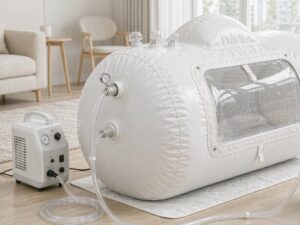
The soft hyperbaric oxygen chamber adopts a flexible pressure-bearing structure, placing the user's whole body in an cabin environment higher than the surrounding atmospheric pressure. The most intuitive differences between it and the hardware co...
詳細を見る
ハイパーオキシジェノセラピー(HBOT)のプロフェッショナル向け機器として、HE5000シリーズは最近、業界で非常に人気があります。その理由は、購入時に各施設が抱えていた主要な問題を解決することができるからです。
詳細を見るで終了する。 0 おかわり