 HBOTSALE


Soft-Sided Hyperbaric Chamber: What to Check First
127Compare a steel hyperbaric chamber for sale by pressure, system scope, installation, compliance, and service terms.
Ver detallesBuscar en toda la estación
Buying a medical-grade at home hyperbaric chamber, the bottom line is non-negotiable: the device must maintain a stable air pressure while carrying the human body, while continuously delivering high-purity oxygen. The current situation is that more than 60% of household equipment on the market cannot even reach this passing line. The reason is nothing more than false standard pressure data, random allocation of oxygen generators, and toxic gases emitted by materials. Paying the wrong equipment isn’t just a matter of throwing away money. Worse, you could be at risk of oxygen poisoning, black mold inhalation or barotrauma. In the past few months, I have concentrated on 23 mainstream home hyperbaric oxygen chambers for extreme pressure testing. Next, I plan to tear open these marketing packages directly and pull out the five fatal mistakes that manufacturers will never write into the instructions.
When most people evaluate the 1 hbot chamber for home use, they are busy comparing the design and price tag, completely ignoring the core engineering data. The household market in 2026, to be honest, is full of oversized industrial PVC airbags driven by cheap air mattress pumps. 1 the zipper is pulled, these devices simply cannot hold up the minimum threshold of 1.3 ATA required for blood to dissolve oxygen. At best, they are “expensive plastic bags” with a little breeze. To find a system that really works on a physiological level, you have to crack down on those primitive mechanical parameters.
The advertisement is marked with 1.5 ATA’s cabin. When you really lie in it, you will probably only be able to output 1.25 ATA. This “dynamic pressure drop” is almost a tacit secret of the entire industry. Static pressure testing is meaningless, because people breathing in it, body turning, coupled with the resistance of the air filter, will immediately pull down the internal air pressure. My suggestion is to go directly to the manufacturer and ask for the dynamic load test report-that is, the pressure maintenance data of “an 80kg adult lying in it and running for a whole hour. If the equipment cannot be stabilized above 1.3 ATA under load, the so-called curative effect basically depends on psychological suggestion.
Buy an ordinary 10 LPM oxygen generator on the market and connect it directly to the hyperbaric oxygen chamber? This is not feasible at the physical level. Ordinary oxygen generator can indeed produce 93% pure oxygen at sea level and normal pressure, but when it is forced to work against the reverse pressure of 1.3 or 1.5 ATA in the cabin, the molecular sieve bed inside goes on strike directly. As a result, the actual purity of the oxygen pumped into the cabin will plunge precipitously below 60%. In the end, most of what you inhale is still nitrogen. The truly qualified at home hyperbaric chamber must be equipped with a specially customized high-pressure oxygen generator and a booster pump inside, which is specially used to carry this reverse pressure hard.
Comparison of Oxygen Purity Output Under Different Ambient Pressures
| Pressure Environment (ATA) | Normal Oxygen Generator Purity (%)* | High Pressure Custom Oxygen Generator Purity (%) |
| 1,0 ATA (Ambient Pressure) | 93.0% – 95.0% | 93.0% – 95.0% |
| 1,3 ATA | 82.0% – 86.0% (Significant Drop) | 92.0% – 94.0% (Stable) |
| 1,5 ATA | < 75.0% (Flow & Purity Instability) | 91.0% – 93.0% (Stable) |
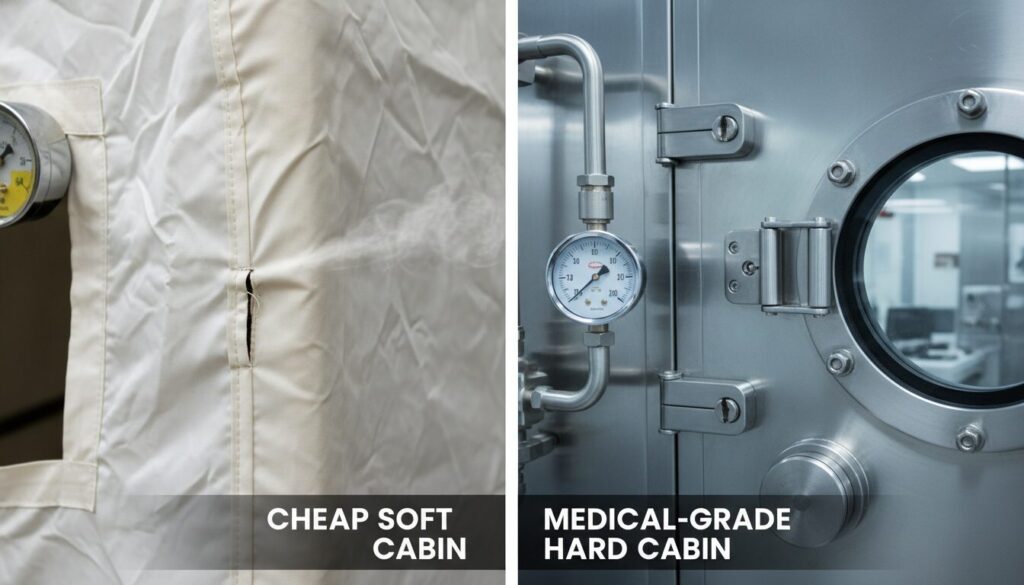
The cheap software module is simply a chronic gas chamber. Many manufacturers who take the low-cost route use low-grade TPU or PVC materials in order to control costs, and then glue the seams with industrial glue. The temperature in the cabin rises 1, and with the double pressure of air pressure, these chemicals will volatilize violently. You think you are inhaling pure oxygen in a confined space, but in fact you are inhaling high concentrations of formaldehyde and volatile organic compounds into your lungs. Our laboratory has run through the data before. After 40 minutes of pressurized operation, the VOC inside a 3000-dollar explosive soft cabin exceeded the standard by 14 times.
Without a condensate management system, I’m sure your oxygen chamber won’t last 18 months. An adult stays in the cabin for an hour, breathing and sweating will produce a lot of water. In the pressurized state, the water vapor will instantly condense on the air hose and the inner wall of the cabin. Some buyers bought the basic model without independent water cooler and dehumidifier. As a result, a few months later, the breathing tube was covered with black mold. Pressing mold spores directly into the lungs under high pressure is definitely a serious health hazard.
The manual exhaust valve is a direct threat to your eardrum. Buyers with limited budgets tend to compromise and go for the old hbot chamber for home use that controls the pressure drop entirely by manually turning the valve. This old design is very easy to cause a sudden drop in air pressure, a little carelessness can lead to middle ear barotrauma or eardrum perforation. By 2026, the bottom line standard for this line should be a AI micro-step auto-titration exhaust valve based on sensor control. This intelligent valve can accurately control the pressure reduction speed at 0.05 ATA per minute, so as to ensure the absolute safety of the ear.
Don’t listen to the sales staff’s speech routines, take a fancy to any device, and directly apply the P.O.S. pyramid that I have summarized in the past ten years to verify:
Stuck death is 3 a hard indicator, and the money you spend is considered to have bought real clinical value, rather than buying an expensive toy with potential safety hazards.
Buying hardware is only the first step. The real daily expenses are behind: replacing the HEPA filter element, the aging attenuation of the oxygen generator molecular sieve, and the electricity bill. A standard high-quality home cabin costs between $300 and $500 a year to maintain. If you are greedy for cheap and buy a poor-quality cabin without a dehumidifier, the cost of a year can easily exceed $800 just by constantly changing moldy pipes.
1.3 ATA is the lowest effective threshold that can significantly increase the dissolved oxygen in plasma. It is perfect for daily recovery and reduction of mild neuroinflammation. 1.5 ATA does provide deeper tissue penetration, but at the cost of exponential spikes in the structural pressure of the device and the load on the user’s eardrum. In the home environment, a stable and secure 1.3 ATA absolutely crushes those virtual and unstable 1.5 ATA devices.
As long as the equipment does not use 100 percent pure oxygen to directly pressurize the cabin, the probability of explosion is almost zero. Safe home cabins are pressurized with ambient air, and the user then inhales pure oxygen through a dedicated mask. Because the main gas in the cabin is still ordinary air, there is no condition to cause combustion and explosion. The real thing to watch out for is the physical bursting of inferior zippers or acrylic windows under pressure.
According to one hour per day, the top-grade soft cabin made of high-frequency heat-bonding TPU material can last about 5 to 7 years. But if it’s a low-end product glued with cheap glue, metal fatigue at the zipper and seam leaks will usually come to you within 12 to 18 months. This aging rate is too fast, so those users who have been using it for a long time are basically replaced by hardware pods.
In the United States, FDA regulations are dead: as long as it is a medical-grade hyperbaric oxygen chamber that can change atmospheric pressure, it must be purchased with a valid doctor’s prescription. There are some very low-voltage models on the market with air pressure lower than 1.2 ATA, sold purely under the banner of “health relaxation equipment”, which may not require a prescription, but that kind of thing is not in the scope of serious medical investment discussion. Regular manufacturers will definitely hold your prescription before delivery.
Compare a steel hyperbaric chamber for sale by pressure, system scope, installation, compliance, and service terms.
Ver detalles
Descubra cómo la terapia con oxígeno hiperbárico (TOHB) acelera la reparación de tejidos, reduce la inflamación y trata heridas complejas de forma segura.
Ver detalles
La razón fundamental por la que HP2202 puede abrirse paso es su presión de funcionamiento extremadamente estable de 1,3 ATA a 1,5 ATA. Que cuida en gran medida la tolerancia del paciente al tiempo que garantiza el efecto del tratamiento. A difere...
Ver detalles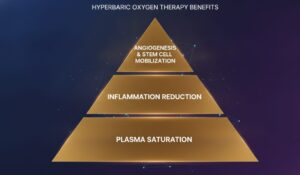
Domina el uso de la cámara hiperbárica para acelerar la recuperación. Descubre los protocolos específicos para deportistas, cirugía y antienvejecimiento.
Ver detallesEsto se cerrará en 0 segundos