 HBOTSALE


جهاز He5000 Überdruckkammer 2-3 أشخاص
1033He5000 Überdruckkammer Für 2-3 أشخاص: 1.5 Ata، سي سي سيشرهيت & هوهر روي. Jetzt Professionelle Hbot Entdecken!
عرض التفاصيلابحث في المحطة بأكملها
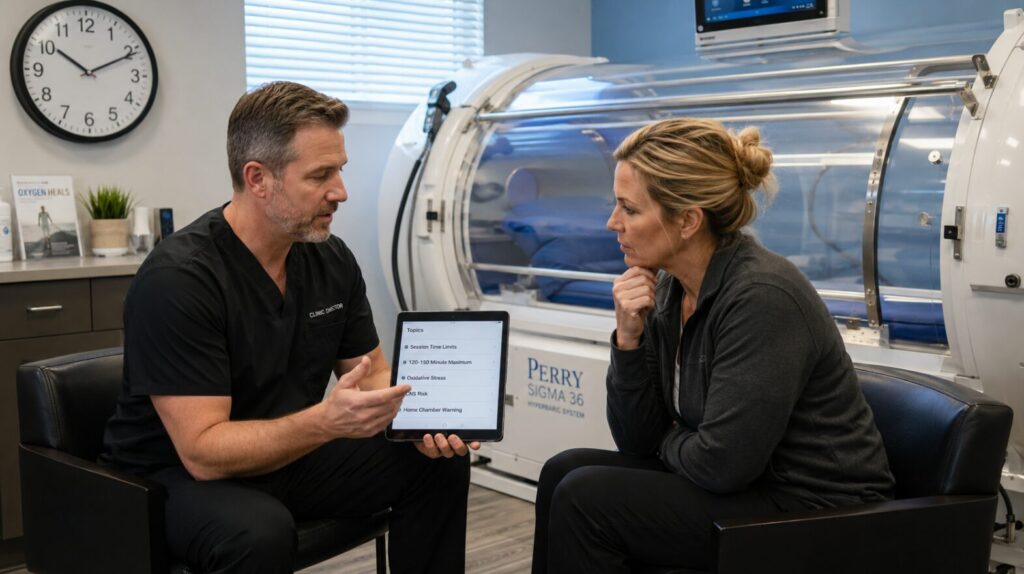
You can safely stay in a clinical hyperbaric chamber for a strict maximum of 120 to 150 minutes per session. Exceeding this exact biological limit triggers severe systemic oxidative stress, entirely reversing any cellular healing. Users asking how long can you stay in a hyperbaric chamber often belong to the biohacking community attempting to sleep inside these units overnight for extreme anti-aging benefits. This is a fatal miscalculation. When patients inquire how long should you stay in a hyperbaric chamber for medical recovery, they must realize that pressurized oxygen acts as a highly volatile drug, not a harmless wellness environment. We will break down the precise biological breaking points of your central nervous system, detail the 2026 oxidative stress data, and map out exactly why zipping yourself into a home chamber for eight hours leads to severe, irreversible trauma.
Oxygen toxicity strictly follows a time-pressure mathematical curve. My proprietary T.O.X. (Time-Oxygen-eXposure) Threshold Framework dictates exactly what happens to your cells minute by minute under 2.0+ ATA (Atmospheres Absolute).
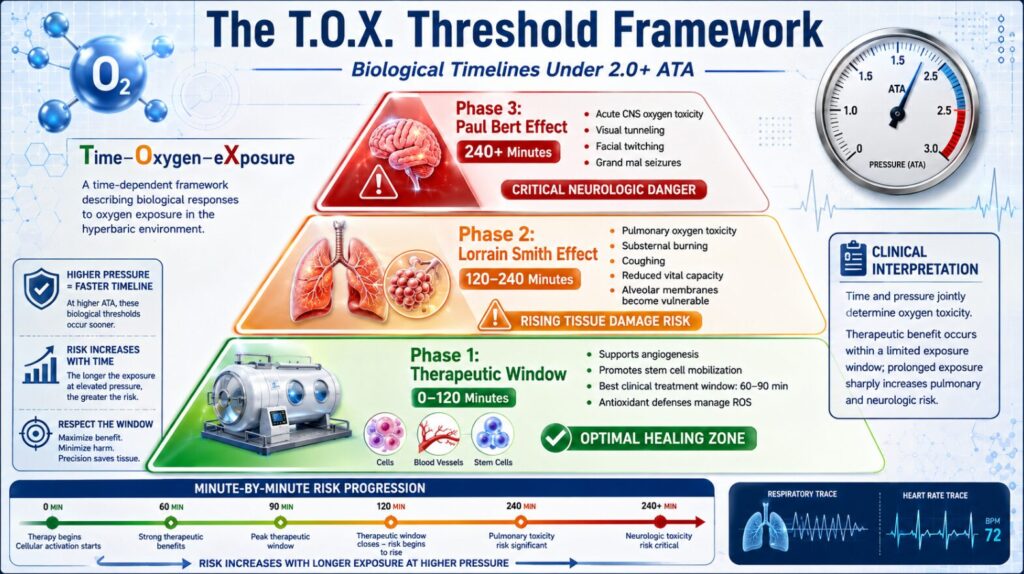
Recent physiological tracking completely dismantles the “more is better” biohacking mentality. A landmark early 2026 clinical review monitored extreme users who forced 3- to 4-hour daily sessions hoping to accelerate telomere lengthening.
The blood panel data proved catastrophic. Subjects exceeding 150 minutes of continuous hyperbaric exposure showed massive spikes in lipid peroxidation and DNA damage markers. The extreme time blocks exhausted their endogenous antioxidants (like glutathione). Instead of reversing aging, the prolonged hyper-oxygenation accelerated cellular apoptosis (cell death). This data firmly answers how long should you be in a hyperbaric chamber—stopping at 90 minutes preserves your antioxidant reserves while securing the healing benefits.
| Biomarker Comparison | 90-Minute Hyperbaric Session | 240-Minute Hyperbaric Session |
|---|---|---|
| Exposure Duration | Controlled therapeutic window | Extreme prolonged exposure |
| Oxygen Stress Level | Moderate oxidative challenge | Excessive oxidative burden |
| Cellular Response | Adaptive antioxidant response activated | Antioxidant systems become overwhelmed |
| Glutathione (GSH) Status | Preserved antioxidant reserve | Significant glutathione depletion |
| Reactive Oxygen Species (ROS) | Managed by endogenous defenses | Accumulates beyond normal control capacity |
| Lipid Peroxidation Markers | Low to moderate increase | Large elevation indicating membrane damage |
| DNA Damage Indicators | Minimal oxidative stress signals | Increased oxidative DNA injury markers |
| Mitochondrial Function | Supports controlled cellular signaling | Increased metabolic stress and dysfunction risk |
| Apoptosis Signaling | Limited activation | Elevated cell death pathway activation |
| Recovery Capacity | Antioxidant system remains available | Recovery resources become depleted |
| Biohacking Outcome | Balanced exposure with recovery potential | Excess exposure may reverse intended benefits |
| Recommended Approach | Maintain a controlled session duration | Avoid prolonged continuous exposure without medical supervision |
| Time Under Pressure | Relative Glutathione Availability |
|---|---|
| 0 Minutes | 100% Baseline Reserve |
| 90 Minutes | High Reserve Maintained |
| 150 Minutes | Noticeable Depletion Begins |
| 240 Minutes | Severe Reserve Reduction |
Sleeping inside a home soft chamber overnight is the most dangerous trend in the consumer HBOT market. Users researching how long can you be in a hyperbaric chamber frequently ask if an 8-hour sleep cycle at 1.3 ATA will cure chronic fatigue.
The primary threat here is carbon dioxide (CO2) poisoning, not just oxygen toxicity. Home soft chambers utilize weak air compressors pushing 5 to 10 Liters Per Minute (LPM). Human exhalation fills a sealed 1.5 ATA space with lethal CO2 far faster than these budget compressors can purge it out. Zipping yourself inside a soft bladder and falling asleep guarantees you will inhale highly concentrated CO2 for hours. This triggers severe hypercapnia, massive blood pressure spikes, and respiratory acidosis. You will wake up with a blinding migraine and nausea, completely erasing any hypothetical healing.
Different medical traumas demand highly specific time blocks within the safe limit. Determining how long to stay in hyperbaric chamber requires matching your pathology to the required ATP (cellular energy) demand.
Traumatic brain injuries (TBI) and stroke recovery require shorter, highly repetitive bursts. Protocols strictly mandate 60 minutes at 1.5 to 2.0 ATA. The brain is highly sensitive to oxygen toxicity; therefore, keeping the session to one hour prevents seizure risks while safely feeding the hypoxic neurons.
Diabetic foot ulcers, late radiation tissue injuries, and severe post-surgical necrosis demand aggressive saturation. Patients remain at target pressure (2.0 to 2.4 ATA) for 90 to 120 minutes. This extended time forces oxygen deep into bone and avascular tissues, triggering the necessary vascular endothelial growth factor (VEGF).
Can I stay in a hyperbaric chamber for 4 hours?
No. Staying inside a pressurized chamber for 4 hours guarantees pulmonary oxygen toxicity and dramatically increases the risk of Central Nervous System (CNS) seizures. Clinical guidelines strictly prohibit continuous sessions lasting longer than 150 minutes.
How long can you stay in hyperbaric chamber if it is a soft home unit?
Even in a mild 1.3 ATA soft chamber utilizing ambient air, sessions must not exceed 90 to 120 minutes. Prolonged stays lead to dangerous carbon dioxide accumulation inside the sealed bladder due to inadequate air purging rates.
Is it safe to sleep in a hyperbaric chamber overnight?
Sleeping in any hyperbaric chamber is highly dangerous. Unmonitored overnight exposure leads to lethal CO2 poisoning in soft chambers, and guarantees severe oxygen toxicity in hard clinical chambers. You must remain awake and alert to monitor ear pressure and signs of toxicity.
How long should I wait between HBOT sessions?
Clinical protocols mandate a minimum “surface interval” of 4 to 6 hours between standard 90-minute treatments. This gap allows your body to clear excess reactive oxygen species (ROS) and prevents cumulative oxygen toxicity.
How many days a week should you do hyperbaric oxygen therapy?
Most clinical healing protocols for severe wounds or radiation damage prescribe 5 consecutive days a week, followed by a 2-day weekend break. This schedule sustains angiogenesis while allowing the central nervous system adequate time to rest.
What happens if you stay in a hyperbaric chamber too long?
Staying in a chamber beyond the 150-minute threshold damages the alveolar membranes in your lungs (chest pain, coughing) and eventually saturates the brain, leading to sudden, violent seizures inside the pressurized tube.
How long do you stay in a hyperbaric chamber for anti-aging?
Anti-aging and biohacking protocols typically recommend 60-minute sessions at 1.5 to 2.0 ATA. Shorter duration prevents the depletion of your body’s natural antioxidant reserves, maximizing the cellular rejuvenation effect without causing oxidative stress.
He5000 Überdruckkammer Für 2-3 أشخاص: 1.5 Ata، سي سي سيشرهيت & هوهر روي. Jetzt Professionelle Hbot Entdecken!
عرض التفاصيل
يعتمد الاختيار المثالي لطرف الكاميرا MC750 hiperbárica المثالي على تكوينها بدقة من خلال تكوينها ودرجة حرارة المريض. في الوقت الراهن، يتم تصنيف سلسلة MC750 بشكل أساسي في ثلاثة أنواع مختلفة من التقنيات: 1) MC750 Estándar (Fija)، ...
عرض التفاصيل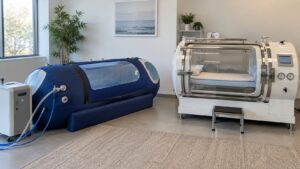
For those who are planning to buy a hyperbaric oxygen chamber, the first point of contention is: should we buy a soft chamber like “a large sleeping bag” or a hard chamber like “a submarine”? Don't look at them all as oxygen chambers. In fact, fr...
عرض التفاصيل
اكتشف الأغراض التي تُستخدم من أجلها غرفة الضغط العالي. تعرف على 7 استخدامات طبية وعلم العلاج بالأكسجين عالي الضغط.
عرض التفاصيلسيُغلق هذا في 0 ثوانٍ