
 Hbot
Hbot


What Does Sleeping In A Hyperbaric Chamber Do
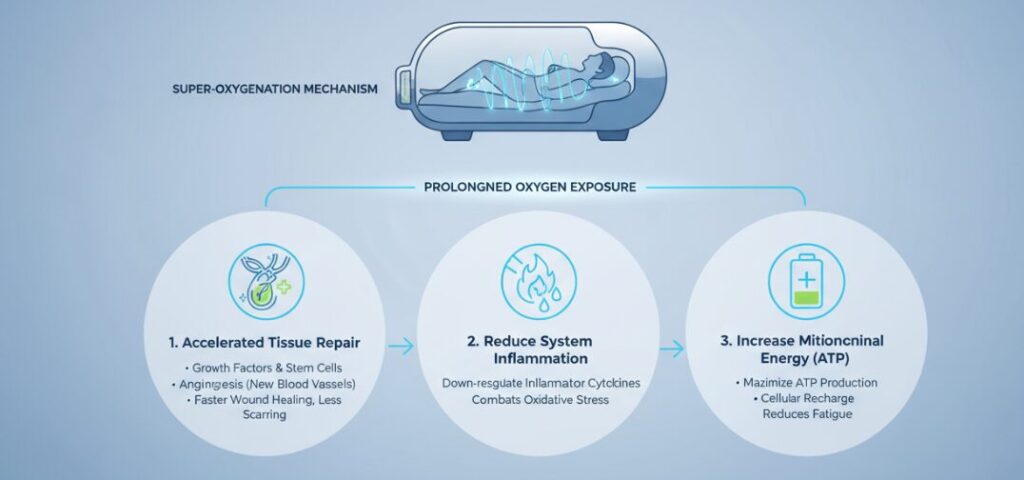
Sleeping in a hyperbaric oxygen chamber (HBOT) significantly speeds up tissue repair, dramatically reduces systemic inflammation, and—crucially—greatly boosts mitochondrial energy (ATP) production.
But sleeping in the cabin is usually only safe in a mild domestic oxygen chamber (1.3-1.5 ATA). In these environments, the increased atmospheric pressure forces oxygen into your plasma and lymph. This mechanism bypasses blood vessels that are constricted by injury or inflammation and delivers nutrients directly to the damaged tissue when you are at rest. In contrast, sleeping in certain high-pressure medical-grade oxygen chambers (above 2.0 ATA) is absolutely prohibited and dangerous. The main risk is central nervous system (CNS) oxygen toxicity and your inability to balance ear pressure when you are unconscious.
How Sleep Works Under Superoxygenation
To understand what sleeping in the capsule does for recovery, we have to look back at the physiological mechanism mentioned above: superoxygenation through fluid saturation.
At normal atmospheric pressure, oxygen is also transported almost entirely by red blood cells. But when you sleep in a pressurized environment—even if it’s just the mild pressure of a home cabin 1.3 to the 1.5 ATA—the Henry’s law of physics comes into play.
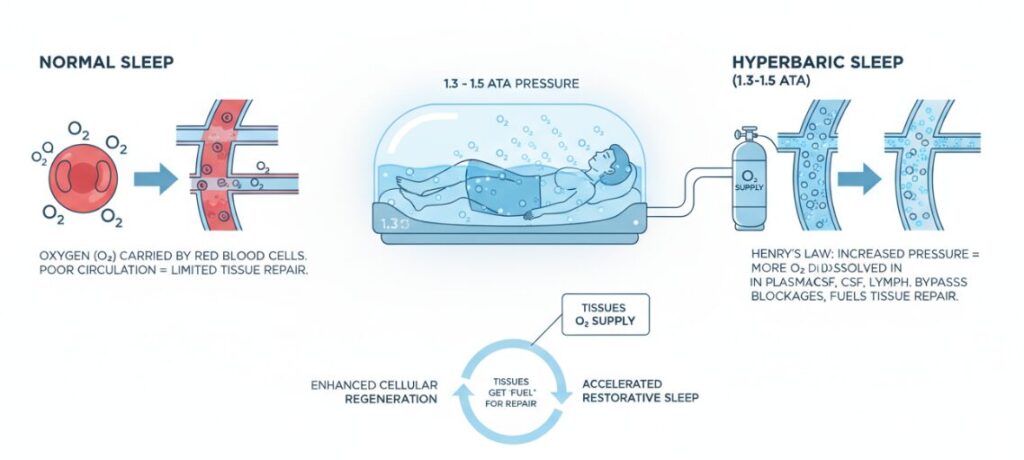
This law is plain: the greater the pressure, the more gas dissolved in the liquid.
Therefore, sleeping in a hyperbaric oxygen chamber, oxygen will be directly dissolved into your plasma, cerebrospinal fluid and lymph. The blood circulation in some parts is already very poor, or the blood vessels are blocked, and the red blood cells cannot pass at all, but the oxygen dissolved in the body fluid can reach it. This ensures that while the body is in its natural regenerative sleep cycle, the tissue still gets the “fuel” it needs to repair.
Key Physiological Benefits Of Sleeping In Cabin
Based on this superoxygenation mechanism, sleeping in the cabin triggers three specific biological reactions, which are very helpful for chronic recovery and postoperative healing:
Accelerated Tissue Repair
That “prolonged” exposure to oxygen during sleep stimulates the release of growth factors and stem cells. This process promotes angiogenesis—the formation of new blood vessels. For those clients I have been in contact with who are recovering from surgery or sports injuries, sleeping in the cabin provides a continuous supply of oxygen necessary for collagen synthesis, which can help the wound close faster and reduce the formation of scar tissue.
Reduce Systemic Inflammation
Chronic inflammation is often at the root of long-term disease. Sleeping in a high-pressure environment helps to down-regulate inflammatory cytokines. By maintaining high levels of oxygen in the blood plasma throughout the sleep cycle, the body can more effectively combat the oxidative stress that leads to systemic inflammation. This relief is evident in patients with autoimmune disease or generalized pain.
Increase Mitochondrial Energy (ATP)
Mitochondria are the power plants of your cells, and they need oxygen to make 3 adenosine monophosphate (ATP), the body’s energy currency. Fatigue is a common symptom of chronic diseases. Sleeping in an oxygen chamber is equivalent to “flooding” the cells with oxygen, thereby maximizing ATP production. To put it more colloquially, this is to “recharge” the body at the cellular level during rest.
Moderate Vs. Medical-Grade Oxygen Chamber
Why Sleeping In A Medical-Grade Oxygen Chamber (2.0 ATA) Is Dangerous:
- Central Nervous System (CNS) Oxygen Toxicity: Breathing in high concentrations of oxygen for prolonged periods of time (such as one sleep cycle) at pressures exceeding 2.0 ATA dramatically increases the risk of CNS oxygen toxicity. This can lead to seizures. If this happens while the patient is asleep and unmonitored, it can be life-threatening.
- Ear Pressure Balance: Your ears are like barometers. In a hyperbaric clinical oxygen chamber, pressure changes require you to actively balance (such as swallowing or pinching your nose to pump air). If you fall asleep, you can’t do this. This can lead to severe barotrauma or permanent hearing loss.
Why The Gentle Home Cabin (1.3-1.5 ATA) Is Usually Suitable For Sleeping:
- The Original Design: The pressure of this type of mild oxygen chamber simulates a depth of about 10 to 16 feet underwater.
- Low Toxicity Risk: Oxygen levels and pressures in these chambers are often below the threshold for triggering CNS toxicity, which makes longer sessions like naps or a full night’s sleep safer.
- Mild Pressure Changes: Although you still need to balance the ear pressure during the pressurization process, once the target pressure (1.3-1.5 ATA) is reached and stabilized—we call it “cruise depth”in the industry—the pressure will remain constant. At this time, the user can sleep comfortably and does not need to constantly clean the ears.
Author:Alex Mercer
I am a Hyperbaric Recovery Specialist dedicated to optimizing cellular health. My work focuses on how hyper-oxygenation drives tissue repair and mitochondrial ATP production. I am passionate about educating patients on the critical safety protocols required for chamber use, specifically distinguishing between the benefits of mild home units and the risks of high-pressure medical environments.