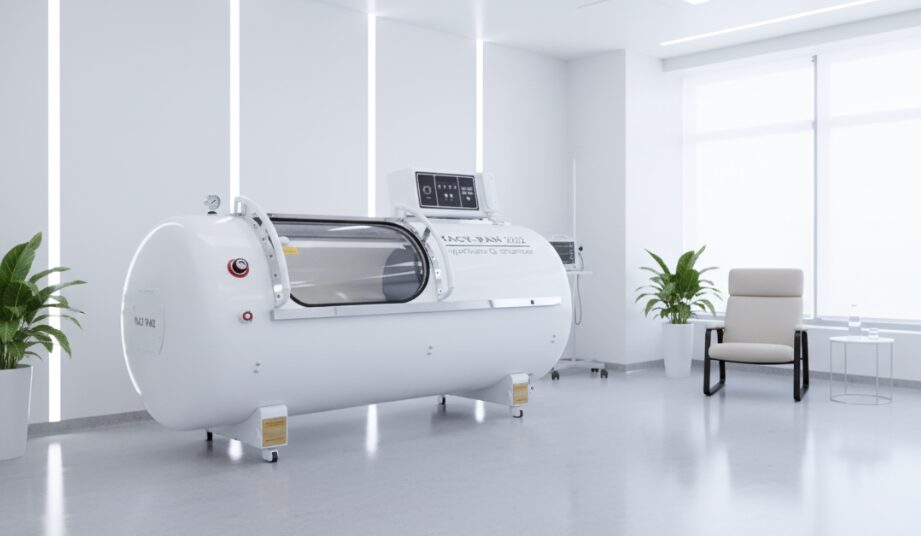
For those who are considering hyperbaric oxygen therapy (HBOT) and their families, if you are worried about the explosion of the device, I can responsibly tell you: in any regular, clinically supervised medical setting, this situation is almost impossible.
While combustion is indeed a theoretical possibility from a purely physical point of view, modern healthcare organizations implement extremely stringent international safety standards-specifically NFPA 99 (Health Care Facilities Code). This set of standards completely excludes the necessary conditions for accidents from the system level. It is important to know that a fire or explosion in a hyperbaric oxygen chamber must simultaneously meet the 3 elements of the “fire triangle”: a high-concentration oxygen environment (combustion improver), combustible substances, and ignition sources (such as electrostatic discharge).
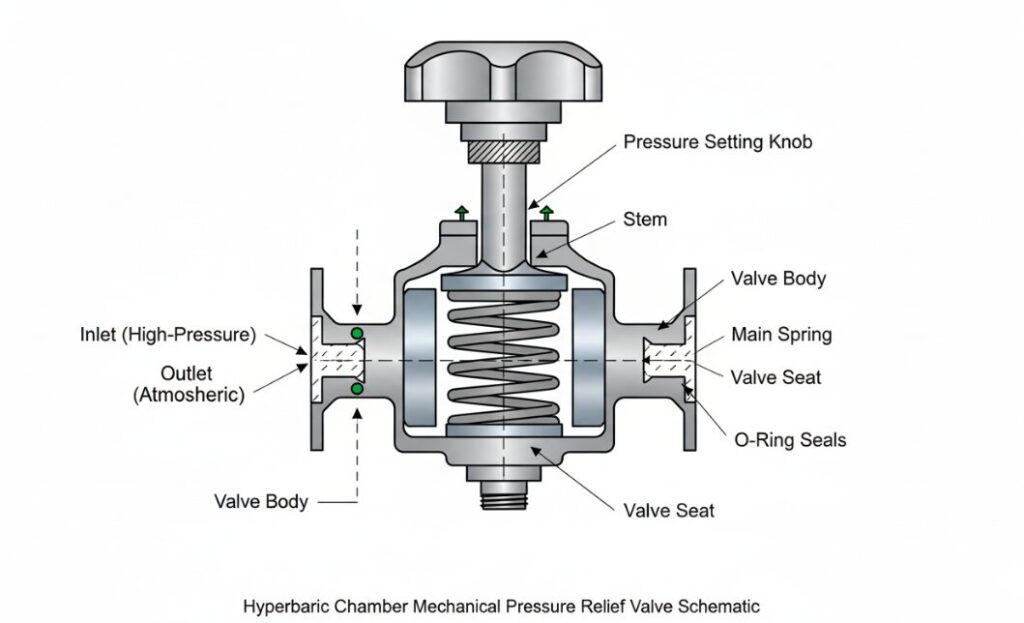
In the clinical environment, we have eliminated these risks through extremely strict operating procedures: all personnel entering the cabin must wear anti-static clothing, it is strictly forbidden to carry electronic products or synthetic fabrics, and all equipment in the cabin is specially designed and explosion-proof. Even, the cabin is equipped with multiple mechanical pressure relief valves as a redundant safety backup. To put it bluntly, this physical structure is designed to ensure that no matter what happens, the cabin can remain in a controlled state.
Deconstructing The Safety System Of Hyperbaric Oxygen Chamber
The fear of “hyperbaric oxygen explosion” usually stems from historical old events or misunderstandings of modern engineering technology. Understanding the operating mechanism of these systems can actually make you feel much more stable during treatment.
About Combustion Improtant: Management Of Oxygen Environment
The heart of HBOT lies in hyperbaric oxygen, which itself is a strong oxidant. This means that materials that are not flammable in ordinary air may become extremely active in high-pressure environments.
Safety guidelines: Clinical centers have a “zero tolerance” policy for items. Before entering the cabin, patients must be carefully screened to ensure that “fuels” such as moisturizers, oily products, specific dressings or prohibited fabrics are completely blocked out. Essentially, we dismantled the “fuel” link in the fire triangle before the treatment began.
To the forefront of nutrition
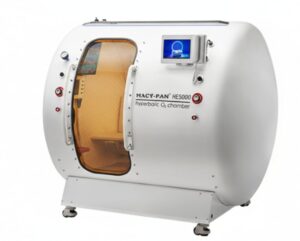
HE5000
2.0ATA, Medical grade pressure is suitable to home health, Dimensions: 82 x 65 x 72 inch for 1-3 person using.
About Ignition Source: Blocking Electrostatic Discharge
In a high-pressure environment, tiny electrostatic sparks can theoretically trigger a reaction, which is really alarming.
Safety guidelines: In order to completely prevent, professional organizations will install anti-static floors and establish strict grounding systems. The patient must change into medical grade cotton clothing. By controlling the environment and clothing, we directly blocked all possible paths of fire into the cabin.
On Structural Safety: Protection Against Mechanical Failure
The structural integrity of the cabin is always under monitoring, and catastrophic accidents caused by pressure have been “locked” in engineering.
Safety guidelines: Whether it is a single cabin or a multi-person cabin, the safety system adopts a redundant design. If the main pressure control system fails, the independent mechanical pressure relief valve will automatically discharge pressure. The key is that these valves are purely mechanical structures that do not rely on electricity, which is like adding a “physical insurance” to the cabin to ensure that the pressure will never exceed the safety range.
How To Determine Whether A Center Is Compliant?
As a patient, you have the right to demand a safe recovery environment. When selecting an organization, you can judge its professionalism by the following points:
Executive standard: Does the organization explicitly follow the NFPA 99 safety standard for hyperbaric oxygen chambers? Transparency of regulations: Is there a clear “no-carry list” (including electronic equipment, watches, synthetic fiber clothing, etc.)? Risk assessment records: regular hidden danger analysis and professional equipment maintenance records are standard for high-quality medical centers.
Disclaimer: This article is for informational purposes only and does not constitute medical advice. If you have specific concerns about treatment, please consult the attending physician or the person in charge of safety of the relevant medical institution.
Author: Marcus Thorne
I am a Senior Hyperbaric Medical Equipment Safety Consultant with over 17 years of experience in clinical hazard analysis and facility compliance. My career is dedicated to bridging the gap between hyperbaric physics and patient safety. I specialize in auditing clinical environments to ensure they meet the highest international safety standards, such as the NFPA 99, so that patients and their families can focus on healing with complete peace of mind, knowing they are in a strictly controlled and secure environment.
When it comes to the price of the official hyperbaric chamber in Macy-Pan, you have to have an idea: the investment span is quite large, usually ranging from $9,000 to more than $69,000. The final price depends on the pressure level and cabin str...
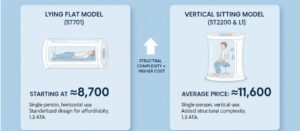
The price range is actually very large, from $8,700 to more than $65,000. This mainly depends on what kind of shell structure you need and how much pressure you want to achieve. Soft Shell Models (1.3 ATA) The budget for these models is usual...
Access Your Dedicated Oxygen Therapy Consultant Service
To ensure we provide you with the most suitable product specifications and a personalized quotation, please kindly provide your contact details and specific requirements. Our senior consultants will address your inquiries and needs within two hours.
Send Us a Message
Get expert oxygen therapy advice. Please share your contact info and needs for tailored specs and quotes. Our consultants will provide professional solutions within 2 hours.

 Hbot
Hbot