 Hbot
Hbot


How Long Can You Stay In Hyperbaric Chamber
64Learn Why Hyperbaric Oxygen Treatments Are Strictly Limited To 60-120 Minutes For Maximum Healing And Patient Safety.
View details
Search the whole station
Hyperbaric Oxygen Therapy (HBOT) chambers are classified into monoplace (single-person, 100% oxygen), multiplace (multiple people, air-pressurized with oxygen masks), and mild/soft chambers (portable, low pressure). Understanding the differences between these types is essential for patients and medical providers to ensure the right therapeutic approach for specific health needs.
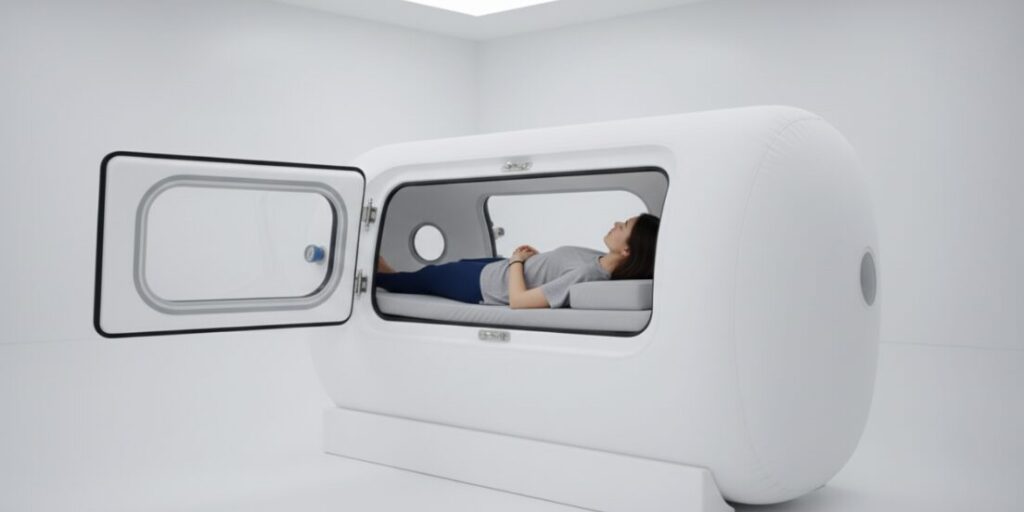
This is the configuration I see most often in major wound care centers and hospitals.
Capacity and operation: Designed for a single person, patients are usually transported into the cabin while lying on a cart.
Environmental settings: The entire interior of the cabin is directly filled with 100% medical oxygen. This design is quite efficient, patients do not need to wear a mask or hood, directly breathe high concentrations of oxygen.
Application scenarios: Mainly used to treat chronic wounds, radiation injuries and specific infections.
Structural considerations: This type of cabin is mostly made of transparent acrylic, with a 360-degree view. From the perspective of clinical monitoring, this greatly reduces the patient’s claustrophobia, and it is also convenient for us to observe the signs in real time outside the cabin.
To the forefront of nutrition
HE5000
2.0ATA, Medical grade pressure is suitable to home health, Dimensions: 82 x 65 x 72 inch for 1-3 person using.
HE5000-Plus
2.0ATA, Medical grade pressure is suitable to home health, Dimensions: 102 x 65 x 72 inch for 1-4 person using.
Diamond-100
2.0ATA, Medical grade pressure is suitable to assist in the treatment of disease, diameter 39inch for two adults using.
If a hospital has a large number of outpatients or needs to deal with severe cases, the multi-person cabin is almost standard.
Capacity and environment: The cabin is spacious and can accommodate two people or even more than twelve people. Unlike the single cabin, the multiplayer cabin is filled with compressed air. In order to obtain a therapeutic effect, the patient must wear a face mask or a lightweight hood to inhale pure oxygen.
Clinical advantage: The core value of this cabin is “accessibility”. When dealing with critically ill patients, it is vital to have medical personnel directly into the cabin for real-time care.
Comfort: Large space means high freedom. For patients who need a long course of treatment, this environment is indeed much more humane than a single cabin.
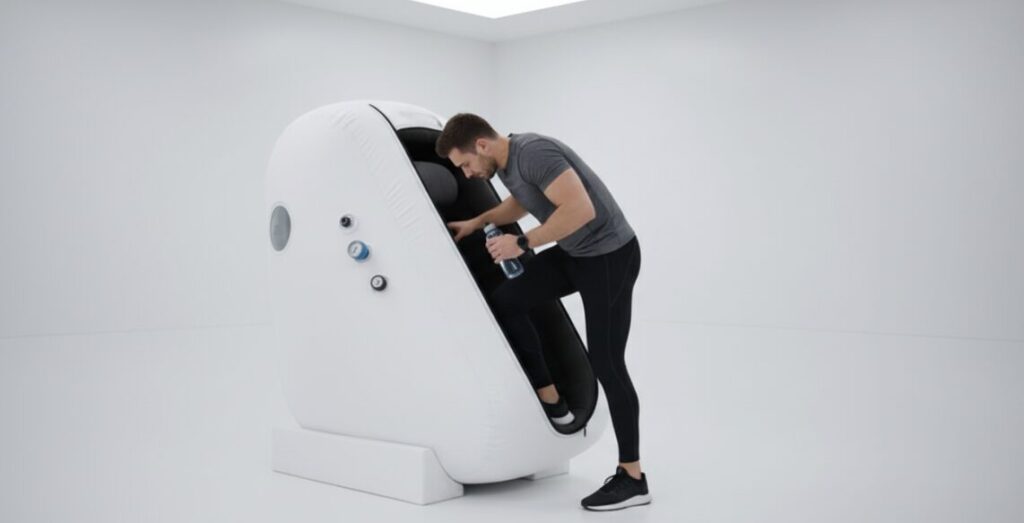
In recent years, these soft cabins have been very popular in the health care circle, but everyone must understand that they are completely different from clinical-level equipment.
Material and portability: Made of flexible materials such as nylon and polyurethane, it is very convenient to install in non-clinical environments.
Physical pressure: Their pressure values are usually between 1.3 and 1.5 ATA, which is much lower than the hard cabin 1.5 to 3.0 ATA standard.
Oxygen supply: It is mostly filled with ordinary air (oxygen content is about 21%), rather than the 100 pure oxygen used clinically.
Advice for use: This is more like an auxiliary means for altitude sickness relief, athlete’s physical recovery or SPA conditioning.
When evaluating devices, I usually emphasize the bottom line of “medical effectiveness.”
Hard-shell cabin (single/multi-person): belongs to medical grade standard. For such emergencies as decompression sickness, carbon monoxide poisoning or severe wound repair, there is no hard cabin support with high pressure and pure oxygen, and the therapeutic effect is basically impossible.
Soft capsule: although it is easy to use, but its treatment range is too narrow. I must remind you that the soft chamber is absolutely not a substitute to treat those complex systemic diseases.
Finally, no matter type of cabin you choose, be sure to consult a medical professional before entering the cabin, and don’t neglect the matching degree between the treatment plan and your own health needs in order to save trouble. Safety and effectiveness are always the first principles of medical evaluation.
Author: Jonathan Miller
I am a clinical specialist with over 13 years of experience in hyperbaric medicine and wound care. Throughout my career, I have witnessed how the misuse of medical equipment can hinder patient recovery. I am passionate about clinical safety and dedicated to helping patients make informed decisions about their health journey.
Learn Why Hyperbaric Oxygen Treatments Are Strictly Limited To 60-120 Minutes For Maximum Healing And Patient Safety.
View details
Discover When HBOT Is Necessary. Expert Insights On Oxygen Therapy For Wounds, Co Poisoning, And Tissue Recovery.
View details
Serie He5000 Macy-Pan: Cámaras De 2.0 Ata, Diseño Duradero Y Máximo Roi Para Centros De Salud Y Bienestar Profesional.
View details
Rent A Hyperbaric Oxygen Chamber For Home Recovery. Get 1.3 Ata Hbot At 50% Less Than Clinic Costs.
View detailsThis will close in 0 seconds