
 Hbot
Hbot


Hyperbaric Treatment For Stroke Recovery
Hyperbaric oxygen therapy (HBOT) is an extremely effective medical intervention for stroke patients. It’s not just a matter of sucking up oxygen; we usually use 100 percent pure oxygen at 2.0 ATA (absolute atmospheric pressure) in the clinic for a very specific purpose: to reactivate the “dormant” brain tissue called the “ischemic penumbra.”
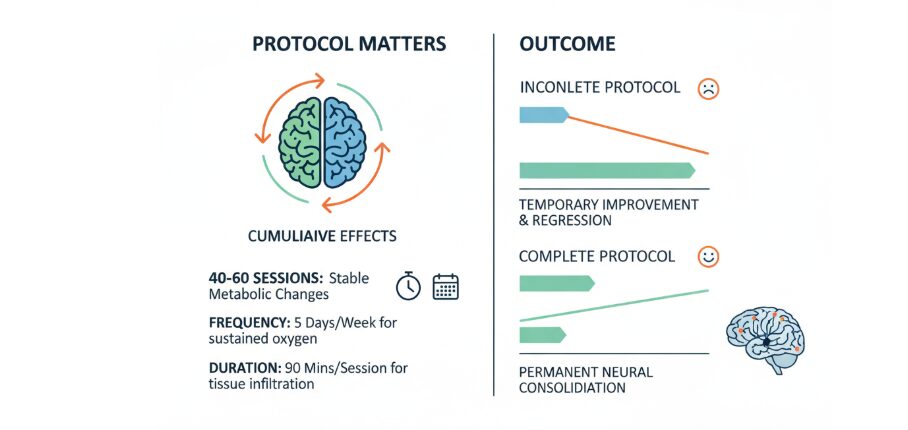
Protocols for stroke recovery often require considerable effort on the part of the patient—typically 40 to 60 interventions (90 minutes each, 5 days a week). At the heart of how this therapy works is the triggering of neuroplasticity and angiogenesis (the growth of new blood vessels).
During this post-HBOT window, the brain tissue is hyper-oxygenated and metabolically active (“primed”). Exercises performed during this time often yield greater improvements in motor function and speech articulation compared to therapy performed in isolation. This synergy effectively leverages the increased energy produced by the mitochondria to accelerate skill relearning.
Revitalizing The Ischemic Penumbra
Effective hyperbaric oxygen therapy is based on the fact that doctors must accurately distinguish between “necrotic brain tissue” and “dormant tissue.” We must be honest with reality: necrotic tissue cannot be revived. However, around the stroke focus, there is usually a large area called the ischemic penumbra. The neurons here are in a state of metabolic retardation—they “strike” due to lack of oxygen, but are structurally intact.
Standard atmospheric pressure is usually not enough to wake up these cells. However, by using a pressure of 2.0 ATA and breathing pure oxygen, we can dissolve oxygen directly into the plasma. This process significantly increases the partial pressure of oxygen in the arteries, forcing oxygen to diffuse farther than usual. This “super oxygenation” bypasses those blocked or narrowed arteries and sends critical fuel in, reactivating those neurons in a state of oscillation and bringing them back online.
Triggering Neuroplasticity And Angiogenesis
To maintain the recovery of the ischemic penumbra, the brain must build a new infrastructure. Hyperbaric oxygen therapy actually acts as a physiological trigger, initiating two distinct biological processes:
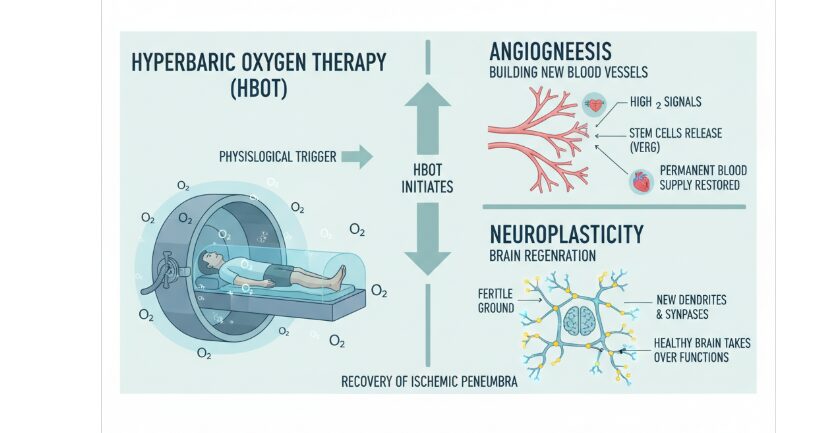
- Angiogenesis: High concentrations of oxygen signals prompt the body to release stem cells and growth factors (such as VEGF) to form new tiny blood vessels. These new blood vessels restore a permanent blood supply to a previously oxygen-deprived area.
- Neuroplasticity: HBOT creates fertile ground for the brain to regenerate itself. It encourages new dendrites and synapses to sprout, allowing healthy parts of the brain to take over functions previously managed by damaged areas.
Hyperbaric Oxygen Therapy Duration
I must emphasize that stroke recovery through HBOT is not a “quick-acting heart-saving pill”; it is a biological retraining process that requires cumulative effects. The specific recommendation of 40 to 60 times is not groundless but stems from the observation of the time required for stable metabolic changes in clinical studies.
- Frequency is key: Sticking to a five-day weekly schedule ensures that oxygen levels in the brain remain high enough to induce structural changes.
- Single Duration: Each 90-minute treatment provides the best therapeutic window, which can infiltrate the tissue without causing oxygen toxicity.
If we stop without completing this protocol, it usually leads to temporary improvement and then regression; while completing the entire cycle helps to permanently consolidate the neural pathways formed during treatment.
Pairing HBOT With Therapy
This is the most critical, yet most overlooked, part of the entire program: the timing of adjuvant therapy. After the end of hyperbaric oxygen therapy, the brain is at the peak of performance and high plasticity. In order to maximize the effect, the most ideal time for physical therapy, occupational therapy or speech therapy is within 2 hours after leaving the oxygen chamber.
During this “post-HBOT window,” the brain is in a state of super oxygenation and metabolic activity (it can be said that the brain is “warmed up”). According to my observation, the exercise performed during this period of time, the improvement of motor function and speech intelligibility, is often better than the treatment performed alone. This synergistic effect effectively uses the increased energy produced by the mitochondria and accelerates the re-learning of skills.
Helping Patients In The Chronic Stage
Because this therapy targets the ischemic penumbra, which can survive for years in a dormant state, patients in the chronic phase (months or even years after a stroke) often see significant benefit. When standard rehabilitation approaches stagnate and patients enter a so-called “plateau,” HBOT provides the metabolic power needed to restart the process. This provides new opportunities to regain lost functions, such as walking, clear speech, and cognitive processing, even if the acute phase has long since passed.
Author:Fabian
As a Clinical Director specializing in neuro-rehabilitation. With over 15 years of experience applying Hyperbaric Oxygen Therapy (HBOT), I focus on helping stroke survivors overcome chronic plateaus. My approach strictly integrates 2.0 ATA protocols with immediate physical and speech therapy to maximize neuroplasticity and revitalize the ischemic penumbra.