
 Hbot
Hbot


Hyperbaric Oxygen Therapy After Plastic Surgery
Hyperbaric oxygen therapy (HBOT) is very direct and effective in dealing with severe bruising, swelling, or difficult wound healing problems after plastic surgery. Its principle is: breathing 100 percent pure oxygen in a hyperbaric chamber, your plasma can absorb 10 to 15 times more oxygen than usual. This huge influx of oxygen can bypass those damaged blood vessels and reach the damaged tissue directly.
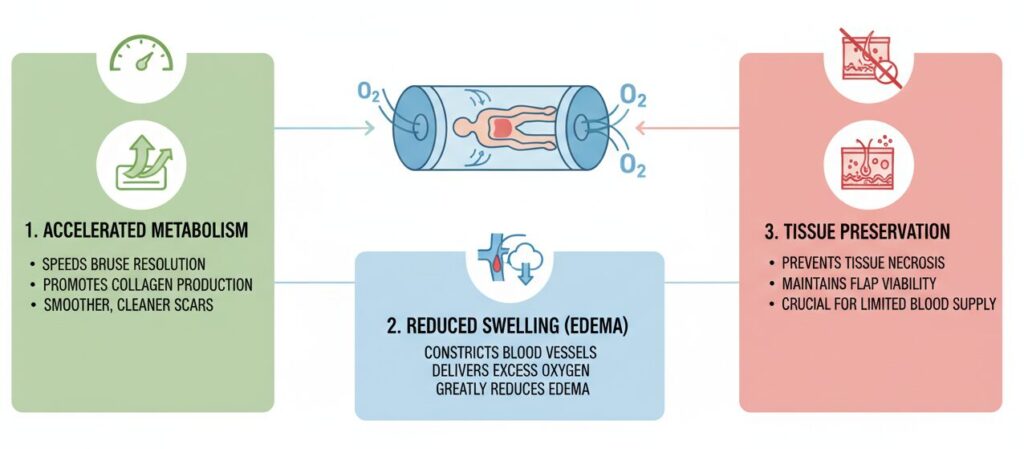
From a clinical recovery perspective, this has 3 crucial effects for the patient:
- Accelerate metabolism: it can speed up the disappearance of bruises, and promote the production of collagen, so that the final scar is more smooth and clean;
- Strong swelling: it can constrict blood vessels while delivering excess oxygen, thus greatly reducing edema (Edema);
- Tissue preservation: In cases of limited blood supply, it is the “gold standard” for the prevention and treatment of tissue necrosis (cell death), which is essential to keep the flap alive.
If 3 to 5 treatments are performed within the first week of surgery, the visible recovery period can usually be shortened by 30% to 50%.
How HBOT Delivers Oxygen To Compromised Tissues
Under normal circumstances, oxygen is transported mainly by red blood cells. However, after plastic surgery, the blood vessels in the surgical area are often cut, burned or squeezed, which forms a “roadblock” around the healing tissue and hinders the delivery of oxygen.
HBOT solves this dead knot through the physics of pressure. When you breathe pure oxygen in a pressurized chamber, the oxygen dissolves directly into the plasma (the liquid part of the blood). This physical dissolution allows the plasma to carry 10-15 times the usual amount of oxygen. Because plasma is a liquid, it is more flexible than red blood cells, can penetrate tissues, bypass damaged blood vessels, and deliver life-saving huge amounts of oxygen directly to the areas where it is most needed.
Clearing Bruising And Enhancing Scar Quality
Postoperative hyperbaric oxygen therapy can significantly accelerate the regression of bruises. The logic behind this is that oxygen provides the necessary energy for the “scavenger cells” in the body to metabolize and remove old blood and waste products that cause discoloration more efficiently. In addition, oxygen is a key fuel for fibroblasts -these cells are responsible for the production of collagen, which is the cornerstone of skin repair.
Ensuring that these cells have an adequate supply of oxygen brings two obvious benefits:
- Faster collagen synthesis: accelerated wound closure.
- Cleaner scars: Provide enough energy for orderly tissue repair to avoid the chaos and hypertrophic scars that result from insufficient energy.
Drastic Reduction Of Post-Op Edema
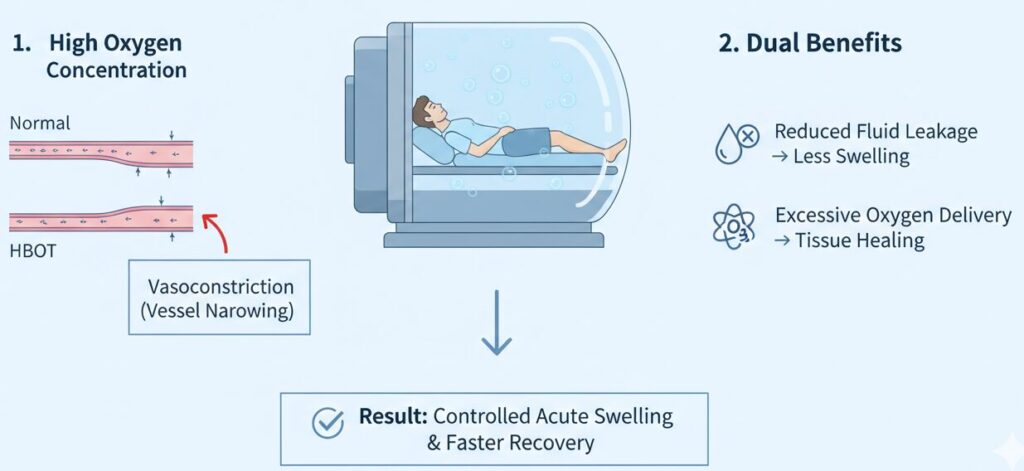
If you want to say that patients feel the most obvious immediate effect, it must be detumescence. Postoperative swelling is a natural inflammatory response, but excessive swelling is not only painful, but can even distort the surgical effect through tension. HBOT uses a unique physiological paradox to deal with this problem: high concentrations of oxygen cause blood vessels to constrict (tighten).
Normally, vasoconstriction limits oxygen supply, but in a hyperbaric oxygen environment, because the plasma is already “supersaturated” with oxygen, the body achieves two goals at once:
- Reduced fluid leakage: Constricted blood vessels leak less fluid into the surrounding tissue, directly blocking the increase in swelling.
- Excessive oxygen delivery: Despite the constriction of blood vessels, the amount of oxygen received by the tissues remains well above normal levels.
This dual role makes HBOT a powerful tool for controlling postoperative acute swelling.
Preventing Tissue Necrosis
From the perspective of medical safety, the core value of HBOT is to prevent tissue necrosis. In procedures involving flaps-such as face lifts, tummy Tuck, or breast lifts-the blood supply to the skin can be severely restricted or temporarily compromised. If the tissue is deprived of oxygen, it dies and turns black, which is devastating for the appearance of plastic surgery. At this critical juncture, HBOT is like the “bridge”, maintaining the survival of the flap during the most critical days after the operation, until new blood vessels grow to take over the blood supply.
Optimal Treatment Time
In order to achieve the desired 30% to 50% reduction in recovery period, three to five treatments within the first postoperative week is currently the best option. This early intervention suppresses swelling before it peaks, protects it by oxygenation when the tissue is at its most vulnerable, and thus “kickstarts” the healing process. This allows patients to return to daily life faster and enjoy the changes brought about by surgery earlier.
About the Author:Archer
I am a dedicated post-operative care specialist with extensive experience in aesthetic medicine recovery. My clinical background focuses on implementing advanced protocols, such as Hyperbaric Oxygen Therapy, to drastically reduce swelling and prevent tissue complications for surgical patients. I am passionate about bridging the gap between medical science and patient comfort, ensuring you have the knowledge to achieve the safest, fastest, and most beautiful results possible.