 Hbot
Hbot


Hyperbaric Oxygen Therapy Macypanofficial
270Discover Safe 1.3 ATA Hyperbaric Oxygen Therapy Macypanofficial Chambers For Home-Based Recovery And Anti-Aging.
View details
Search the whole station
In general, the size of a hyperbaric chamber spans from compact portable units to massive multiplace clinical systems. Portable soft-shell chambers typically measure 27–36 inches in diameter and 7–9 feet in length, fitting easily into residential rooms. Hard-shell monoplace chambers (the standard for most private clinics) generally require a 10×10 foot area to account for the vessel, oxygen control systems, and operator clearance. Large-scale multiplace chambers used in hospitals are industrial-sized, often requiring dedicated clinical wings with reinforced flooring, specialized ventilation, and significant square footage to accommodate multiple patients and support staff.
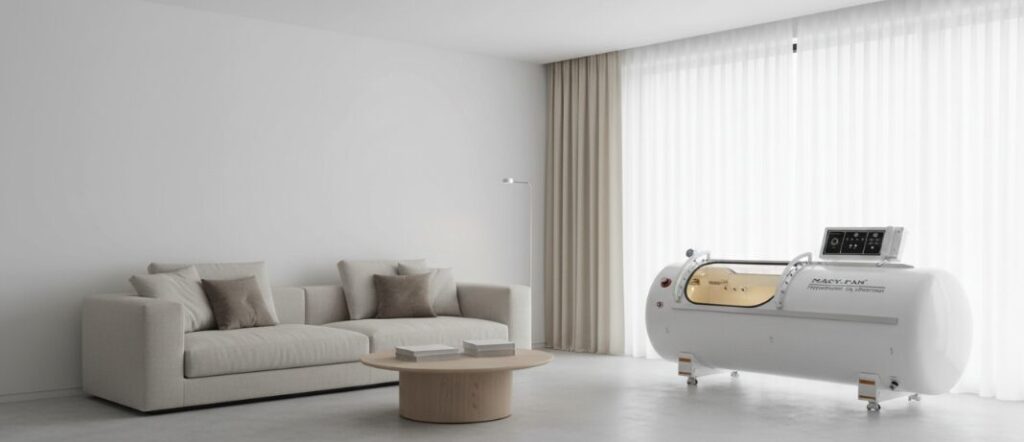
This type of cabin is mainly designed for home convenience. Because its working pressure is low (usually within 1.3 ATA), the material is flexible and high-strength fabric, and it does not need to occupy an area like a metal can.
If you plan to open a clinic or do a health center, the hardware single cabin is the benchmark configuration that cannot be bypassed. It provides a 100 percent pure oxygen environment, which is much more demanding for installation.
At this level of hospital application, the multi-person cabin is actually equivalent to a miniature pressurized “room.”
To the forefront of nutrition
HE5000
2.0ATA, Medical grade pressure is suitable to home health, Dimensions: 82 x 65 x 72 inch for 1-3 person using.
HE5000-Plus
2.0ATA, Medical grade pressure is suitable to home health, Dimensions: 102 x 65 x 72 inch for 1-4 person using.
Diamond-100
2.0ATA, Medical grade pressure is suitable to assist in the treatment of disease, diameter 39inch for two adults using.
When evaluating which cabin to choose, don’t just focus on the price, but also consider these hard indicators:
Author: Mark Henderson
Hi, I’m a specialist with over a decade of experience in hyperbaric equipment engineering and medical facility planning. Having overseen the installation of hundreds of high-pressure chambers—ranging from compact home units to complex hospital-grade systems—I’ve seen firsthand how poor spatial planning can impact both safety and operational efficiency.
Discover Safe 1.3 ATA Hyperbaric Oxygen Therapy Macypanofficial Chambers For Home-Based Recovery And Anti-Aging.
View details
Descubre La Cámara Hiperbárica Tipo Camilla Mc750: 1.8 Ata, Diseño Ergonómico Y Certificación Iso Para Clínicas.
View details
Learn Why Fatigue After HBOT Is A Positive Sign Of Cellular Repair, Detoxification, And Deep Physical Recovery.
View details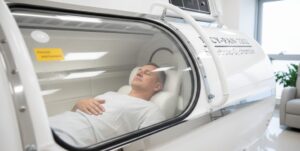
Tired After Your First HBOT Dive? Discover Why Fatigue And Hunger Are Actually Positive Signs Of Deep Cellular Healing.
View detailsThis will close in 0 seconds