
 Hbot
Hbot


HBOT Chamber Benefits For Viral Infections
The core value of hyperbaric oxygen chamber (HBOT) in dealing with viral infection lies in its ability to overcome the body’s own oxygen delivery limitations and reverse deep tissue hypoxia and systemic inflammation—two factors. For those who are suffering from viral sequelae (such as long new crown Long COVID, Epstein-Barr virus recurrence, or chronic fatigue syndrome), drug therapy is often difficult to reach deep into the lesion.
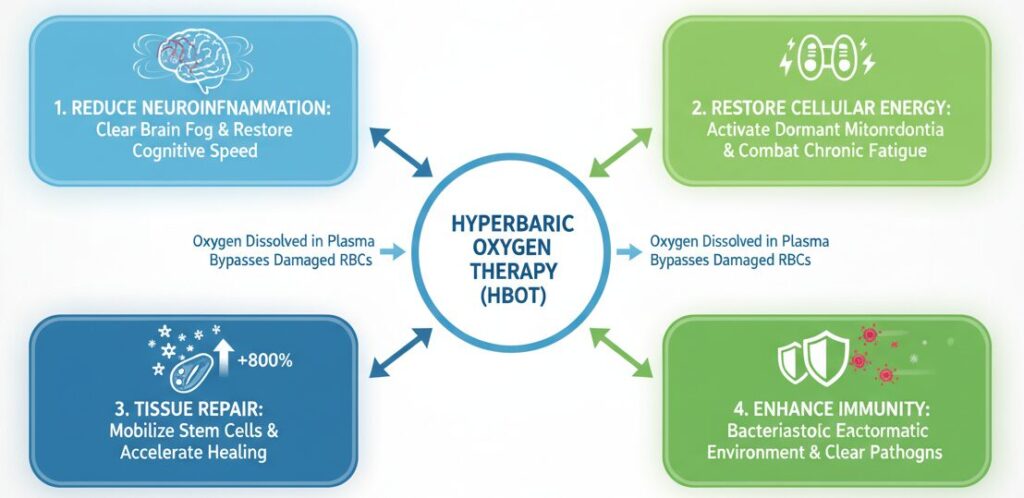
HBOT works by dissolving oxygen directly into the plasma, bypassing those red blood cells that may have been damaged. This process can achieve four key clinical outcomes that drugs usually cannot achieve alone:
- Dramatically reduce neuroinflammation, clear the “brain fog” and restore cognitive speed;
- Restart the “dormant” mitochondria, restore cellular energy through to fight chronic fatigue;
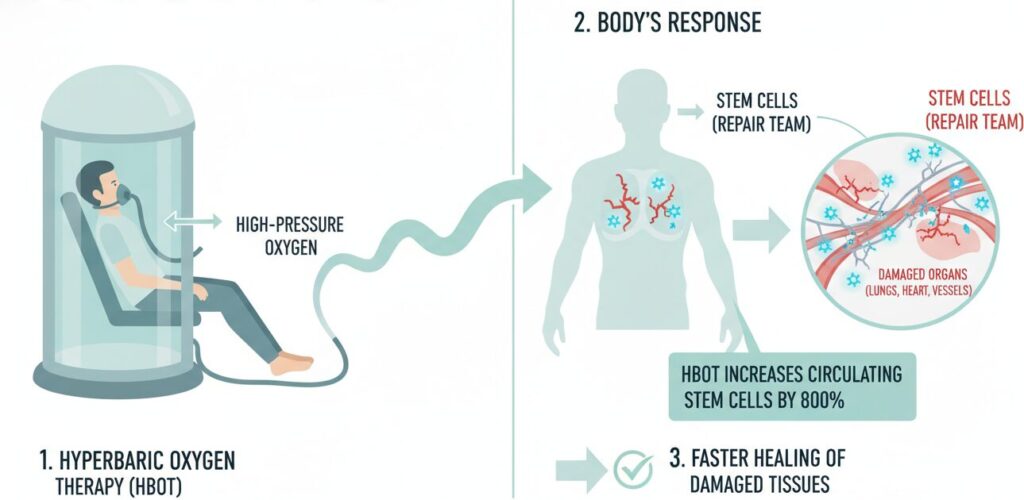
- Massive mobilization of stem cells (up to 800 percent) to accelerate the physical repair of damaged tissues;
- Create a bacteriostatic environment that inhibits viral replication and enhances the immune system’s ability to clear residual pathogens.
Bypassing Compromised Red Blood Cells To Reverse Hypoxia
In a healthy body, red blood cells are responsible for most of the oxygen transport. Viral infections, however, often destroy these cells or cause endovascular dermatitis (endothelitis), which effectively creates a “transit bottleneck” that prevents oxygen from reaching the deeper tissues at all. HBOT works because it uses the laws of physics—specifically, Henry’s Law—to bypass this bottleneck. When we put the patient in a pressurized environment, oxygen is forced to dissolve into liquid plasma, lymph and even cerebrospinal fluid. This means that oxygen can penetrate into areas where blood circulation is weakened or even blocked. This approach is independent of the state of hemoglobin and directly and effectively reverses the “oxygen starvation” (hypoxia) of deep tissues.
Reducing Neuro-Inflammation And Clearing Brain Fog
In post-viral syndrome, one of the symptoms that most make patients feel weak is cognitive dysfunction, which is often referred to as “brain fog”. Pathologically, this usually stems from neuroinflammation—the brain is in a state of chronic inflammation and lack of oxygen. In response to this, HBOT a dual mechanism of action: it constricts blood vessels to reduce swelling, while at the same time perfusing the brain with extremely high levels of oxygen. This combination directly breaks the vicious cycle of inflammation. By restoring brain oxygen levels to an optimal state, HBOT helps quell “cytokine storms” in neural pathways “. The clinical manifestation is that the patient’s reaction speed becomes faster, the memory retention is better, and the typical post-virus mental confusion also dissipates.
Reactivating Mitochondria To Combat Chronic Fatigue
Viral infections tend to put the body’s cells into a defensive “hypometabolic” state, which, to put it bluntly, shuts down the cell’s power plant, the mitochondria. This is why sufferers a devastating, extreme exhaustion that cannot be relieved by rest. HBOT plays the role of a powerful energy catalyst here. Oxygen is the basic fuel for the production of 3 adenosine monophosphate (ATP). By delivering excess oxygen directly to the cell, HBOT is essentially “firing” these dormant mitochondria “. This shift allows the body to switch from “survival mode” back to “boom mode”, providing the cellular energy necessary to overcome chronic fatigue and restore daily function.
Mobilizing Stem Cells For Accelerated Tissue Repair
The virus can cause damage to organs at the microscopic level, including the lungs, heart and vascular system. Repairing these injuries relies on the body’s own regenerative mechanisms. A very significant impact of HBOT on the physiological level is the mobilization of stem cells. Research data has shown that HBOT can increase the number of circulating stem cells by up to 800 percent. These stem cells are the “repair team” inside the body “. Once mobilized in a hyperoxic environment, they migrate to areas of damaged tissue. In my opinion, this is one of the most far-reaching benefits of HBOT in dealing with viral infections, because it actually speeds up the physical healing of damaged organs.
Creating A Bacteriostatic Environment And Boosting Immunity
Finally, the environment created in the body during HBOT is extremely hostile to many pathogens. High concentrations of oxygen create a bacteriostatic environment that helps inhibit the replication of certain anaerobic bacteria and viruses. More critically, our immune system white blood cells (specifically neutrophils) need oxygen to perform oxidative “oxidative burst”—a central mechanism by which they hunt down invaders. In hypoxic tissues, the immune system is effectively “disarmed. By restoring oxygen levels, HBOT is tantamount to re-arming the immune system, increasing its ability to remove residual pathogens and thus addressing persistent infections that the body had previously been unable to fight.
Author:Jack
I am a clinical HBOT specialist dedicated to post-viral recovery. In my practice, I focus on using Hyperbaric Oxygen Therapy to reverse systemic inflammation and cellular hypoxia. I hope to move beyond symptom management and provide the physiological energy substrate needed for the body to heal itself.